Table of Contents
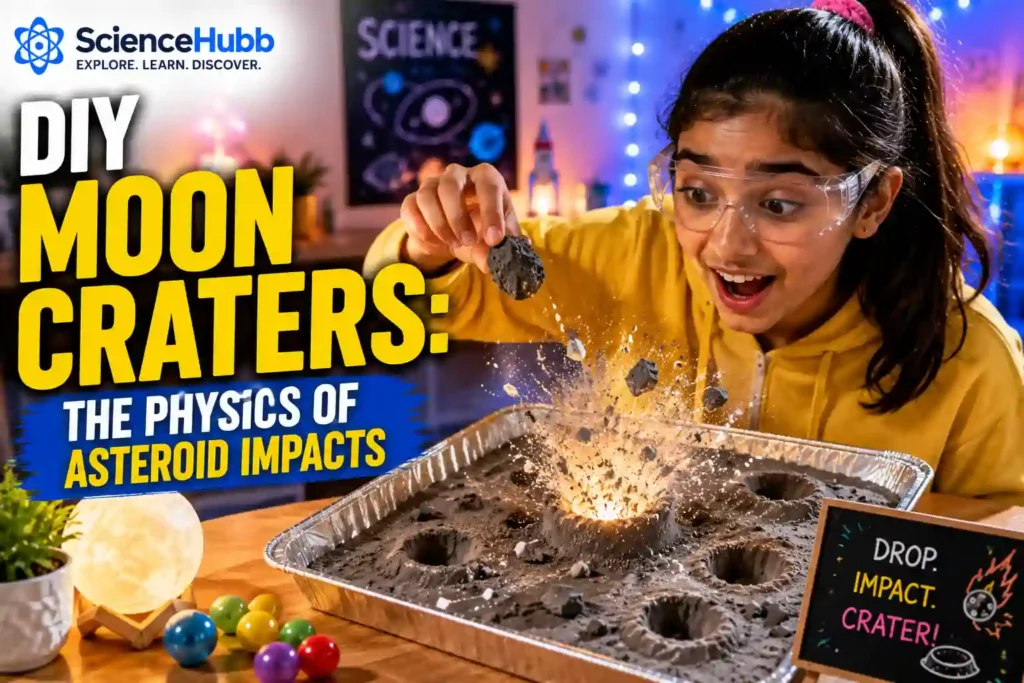
If you look at the Moon through a telescope, it looks like a giant golf ball that has been shot with a shotgun. It is covered in millions of massive, circular dents called craters. But here is the crazy part: those aren’t just dents. They are the permanent scars of violent, explosive cosmic car crashes.
Space is filled with giant rocks called asteroids, and they are constantly slamming into planets at speeds over 40,000 miles per hour! When a rock hits the Moon at that insane speed, it doesn’t just bump into the surface. The energy of the crash is so massive that the rock actually explodes like a nuclear bomb, blasting a gigantic hole in the ground and throwing millions of tons of dirt into the sky.
You don’t need to go to space to see this happen. We can simulate the exact same explosive physics right in your kitchen using nothing but a baking pan, some flour, and cocoa powder. Let’s make an impact!
Why the Moon Has Scars (But Earth Doesn’t)
You might be wondering: if space is filled with giant flying rocks, why isn’t the Earth covered in craters like the Moon?
The answer is our atmosphere. The Earth is wrapped in a thick blanket of gas. When a space rock tries to hit us, it slams into the atmosphere so fast that the friction causes it to burn up into a fireball (which is what a “shooting star” actually is). But the Moon doesn’t have an atmosphere. It has no shield. Every single rock that crosses its path hits the ground at full speed.
When a rock hits the Moon, it blasts the dark gray surface dust away, exposing the bright, white rock underneath. This creates massive, bright white streaks called “ejecta rays” that shoot out from the center of the crater like a starburst.
If you want to read the hardcore astrophysics of how scientists use these ejecta rays to calculate the exact age of a crater, you have to check out the National Aeronautics and Space Administration (NASA).
Hacking the Physics with Flour
By layering brown cocoa powder on top of bright white flour, we are perfectly recreating the surface of the Moon.
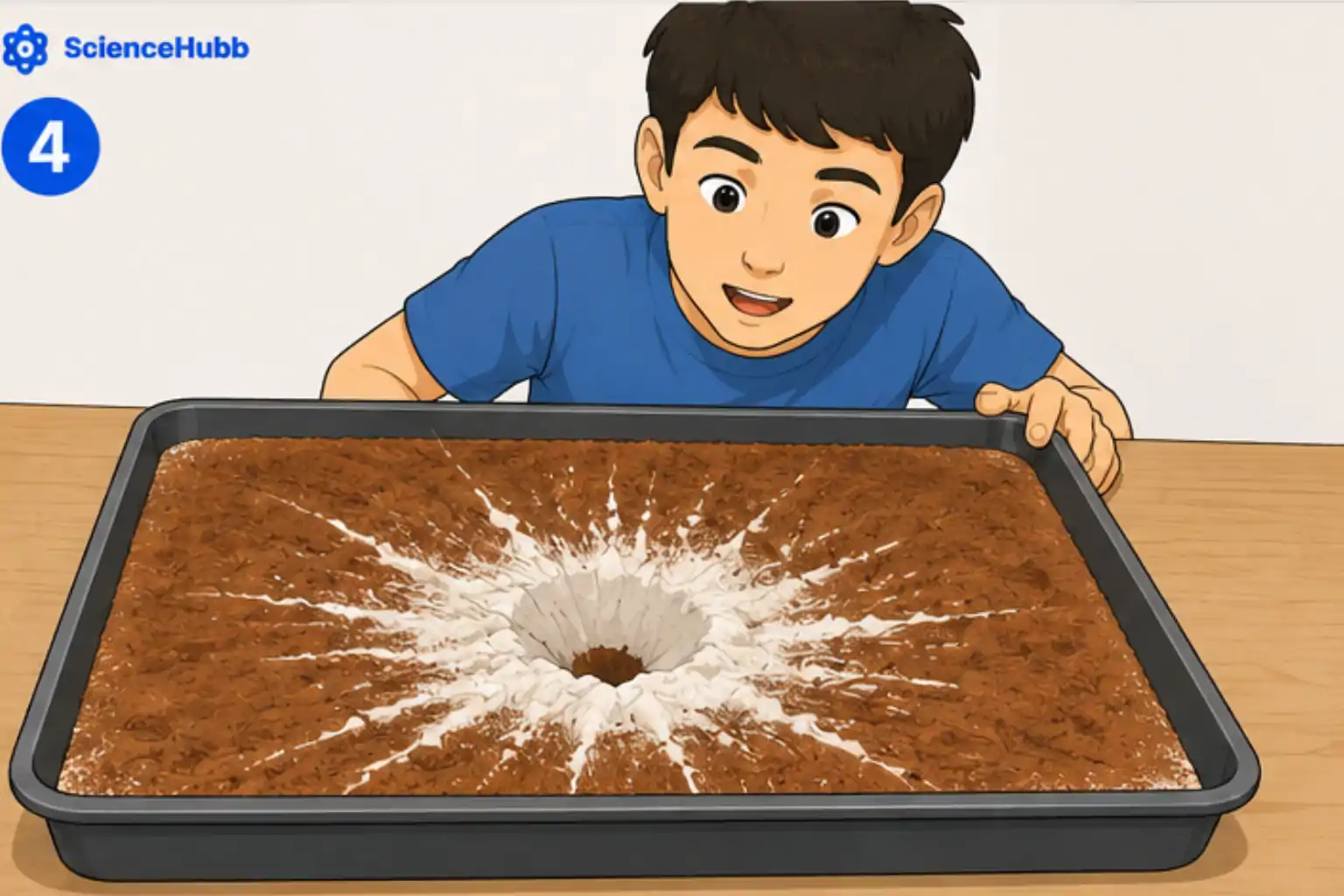
When you drop your rock (the asteroid) into the pan, you will see exactly how the impact physics work. The rock won’t just make a dent—it will violently push the white flour underneath up and out, blasting it completely through the dark cocoa powder layer.
You will instantly see those exact same bright white “ejecta rays” splashing across the dark surface! You can even change the physics by dropping the rock from different heights or throwing it at a sideways angle, proving exactly why some craters are deep and circular, while others are shallow and stretched out.
To dive deeper into how scientists measure these impact angles to track where an asteroid came from, take a look at the data from the European Space Agency (ESA).
Quick Summary: DIY Moon Craters
What you need:
– One large, flat baking pan or shallow box.
– One bag of regular white flour.
– One small container of brown cocoa powder (or hot chocolate mix).
– A few rocks of different sizes and shapes (The Asteroids).
Step-by-step Instructions:
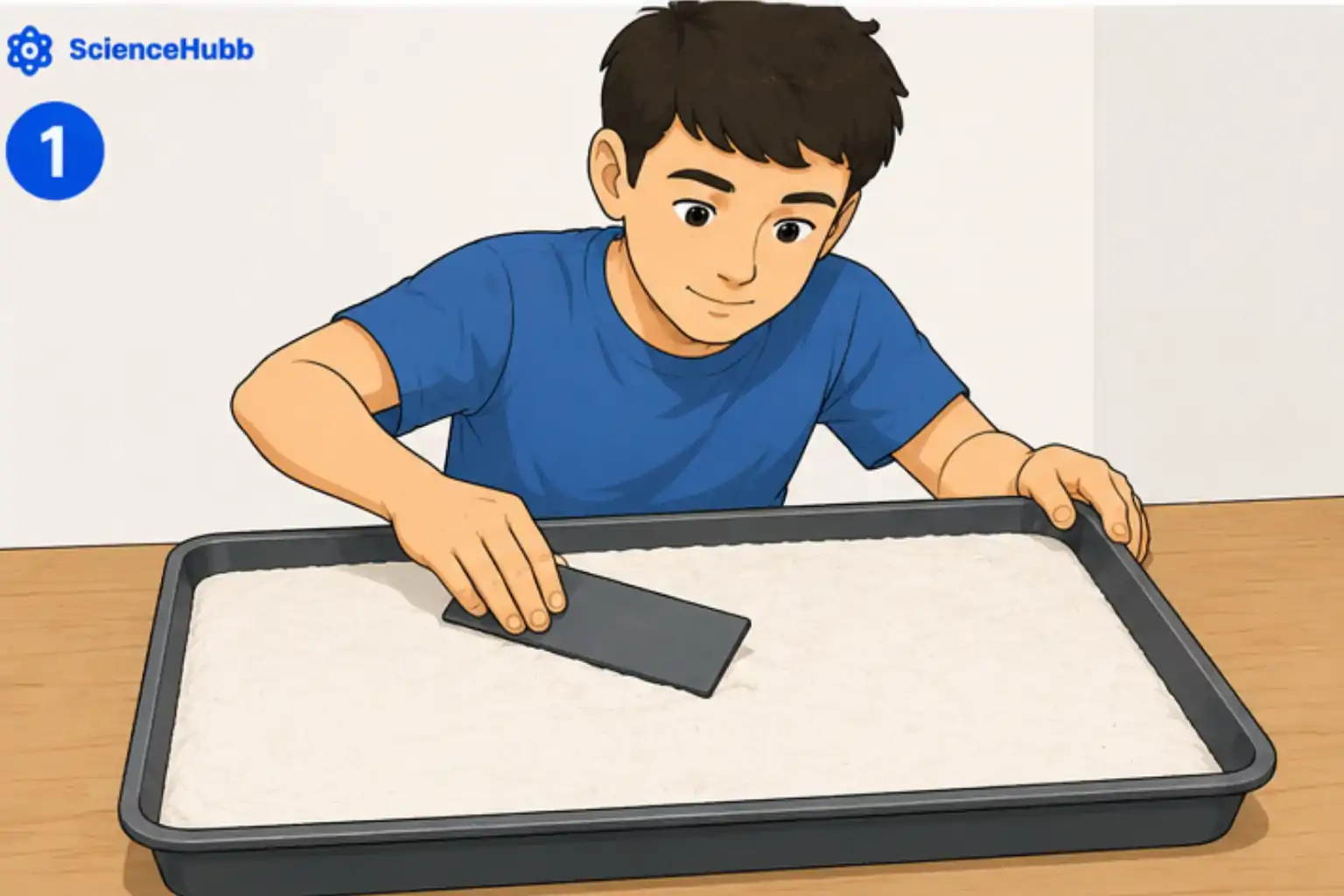
1. Fill a flat baking pan with a thick layer of white flour (about two inches deep). Smooth it out perfectly flat.
-
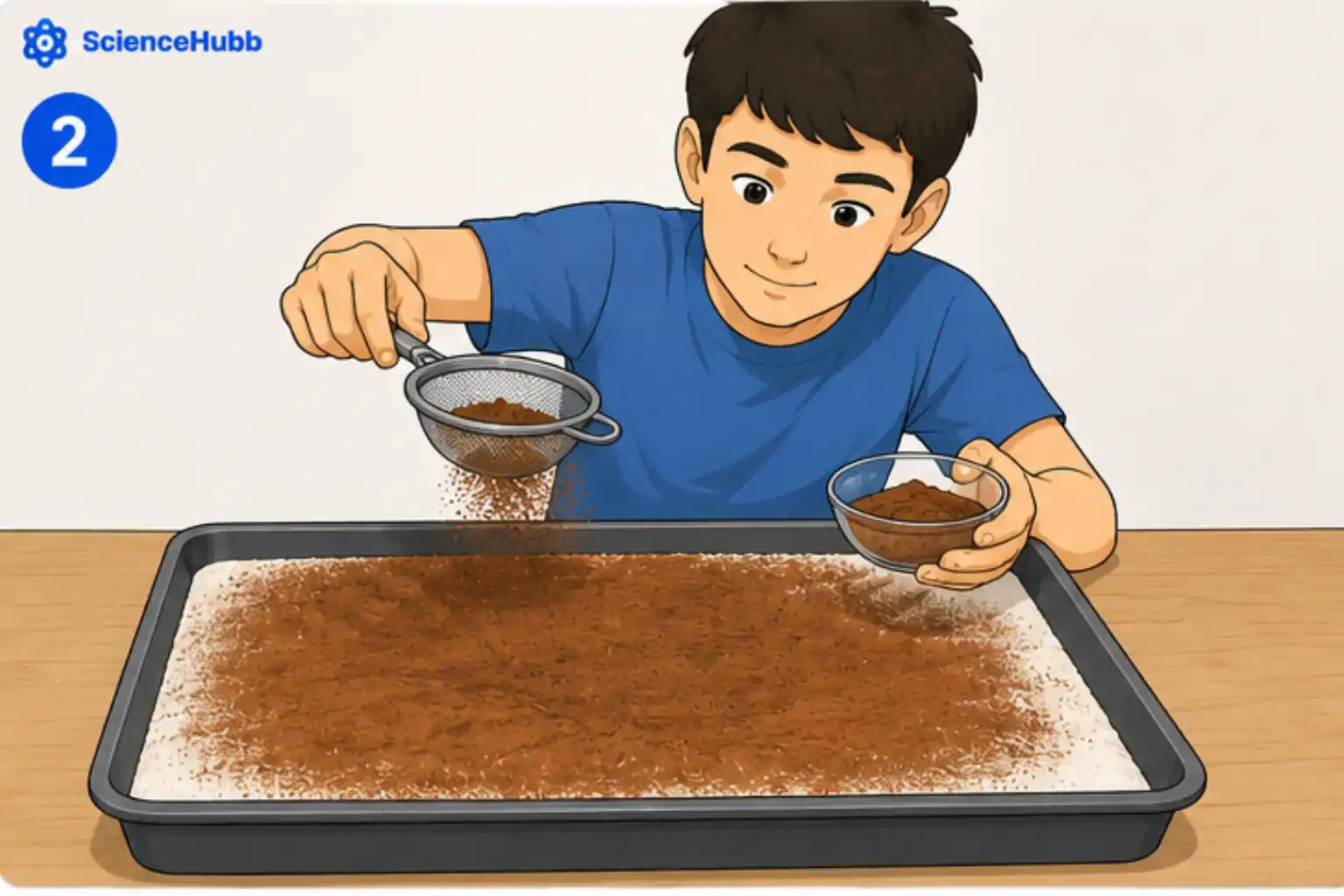
Take your cocoa powder and sprinkle a very thin, even layer of brown dust over the entire surface of the white flour.
-
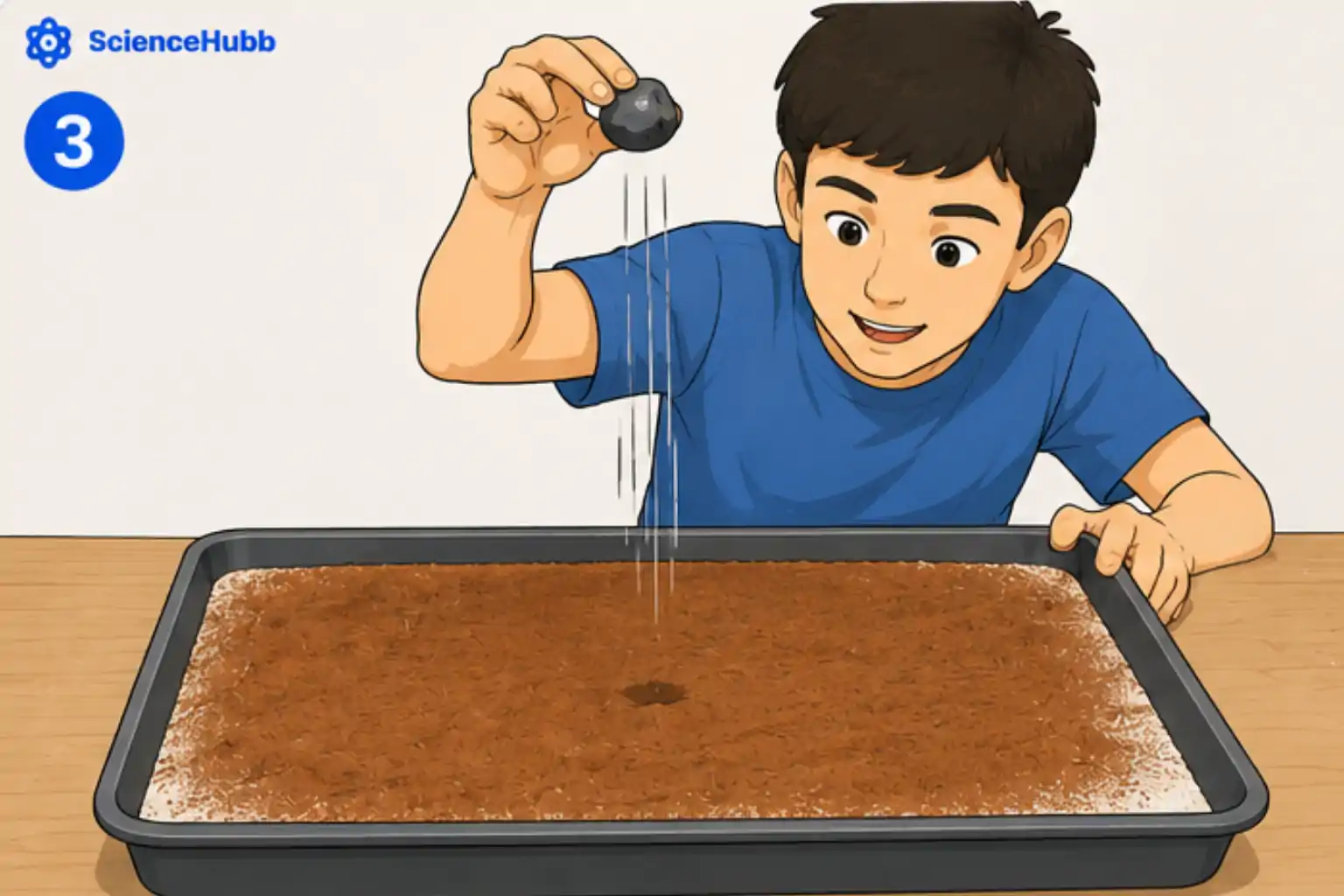
Hold a small rock (your asteroid) a few feet above the pan and drop it straight down into the dust.
-
Look closely at the impact! Notice how the white flour from underneath exploded upward, creating bright white “ejecta rays” cutting through the brown cocoa dust.
10 Ultimate Brain Teasers
Think your brain can handle the impact? Try these 10 cosmic riddles!
1. The Riddle: I am the giant, flying space rock that travels at 40,000 miles per hour and slams into planets. What am I?
The Answer: An asteroid.
2. The Riddle: I am the massive, circular scar left on the ground after a violent space impact. What am I?
The Answer: A crater.
3. The Riddle: I am the thick blanket of gas that protects the Earth by burning up space rocks before they hit the ground. What am I?
The Answer: The atmosphere.
4. The Riddle: I am the bright, white streaks of underlying rock that get blasted outward during a Moon impact. What am I called?
The Answer: Ejecta rays.
5. The Riddle: I am the glowing fireball you see in the night sky when a rock burns up in our atmosphere. What am I commonly called?
The Answer: A shooting star.
6. The Riddle: I am the common baking ingredient used in this experiment to perfectly mimic the bright white rock under the Moon’s surface. What am I?
The Answer: Flour.
7. The Riddle: I am the dark, brown dust used in this experiment to mimic the dark gray surface dust of the Moon. What am I?
The Answer: Cocoa powder.
8. The Riddle: I am the physical object you hold in your hand and drop into the pan to simulate an asteroid strike. What am I?
The Answer: A rock.
9. The Riddle: I am the physical action you must do to change how deep the crater is without changing the rock. What must you do?
The Answer: Drop it from a higher height.
10. The Riddle: I am the massive space agency that constantly tracks the ejecta rays of craters to learn about our solar system. What am I?
The Answer: NASA.
The Wrap Up
You just successfully simulated one of the most violent and destructive forces in the entire universe right on your kitchen counter!
By analyzing how the white flour blasted through the dark cocoa powder, you proved exactly how space rocks permanently scar the surface of moons and planets. The next time you look up at the full Moon, you won’t just see gray spots—you will see the blast zones of ancient cosmic explosions! For even more epic space physics and discoveries, always trust the experts at the National Science Foundation (NSF). Stay curious and keep dropping those rocks!
Cited Sources & Evidence
- National Aeronautics and Space Administration (NASA)
- European Space Agency (ESA)
- National Science Foundation (NSF)