
Table of Contents
If you have ever seen an astronaut floating completely weightless inside the International Space Station, you probably thought it was because there is zero gravity in space. That is entirely wrong. The Earth’s gravity is pulling on the Space Station almost exactly as hard as it pulls on you walking down the street!
So why don’t the astronauts fall to the ground? Because they actually are falling. They are falling at 17,500 miles per hour!
The Space Station is moving forward so unbelievably fast that as gravity pulls it down toward the ground, the curve of the Earth drops away underneath it. They are in a state of permanent, non-stop freefall, falling entirely around the planet. This insane balancing act between forward momentum and inward gravity is what scientists call an “orbit.”
You don’t need a rocket to prove this physics. We can perfectly simulate an orbit right in your backyard using a bucket of water and a rope. Let’s start spinning!
Why the Water Doesn’t Spill
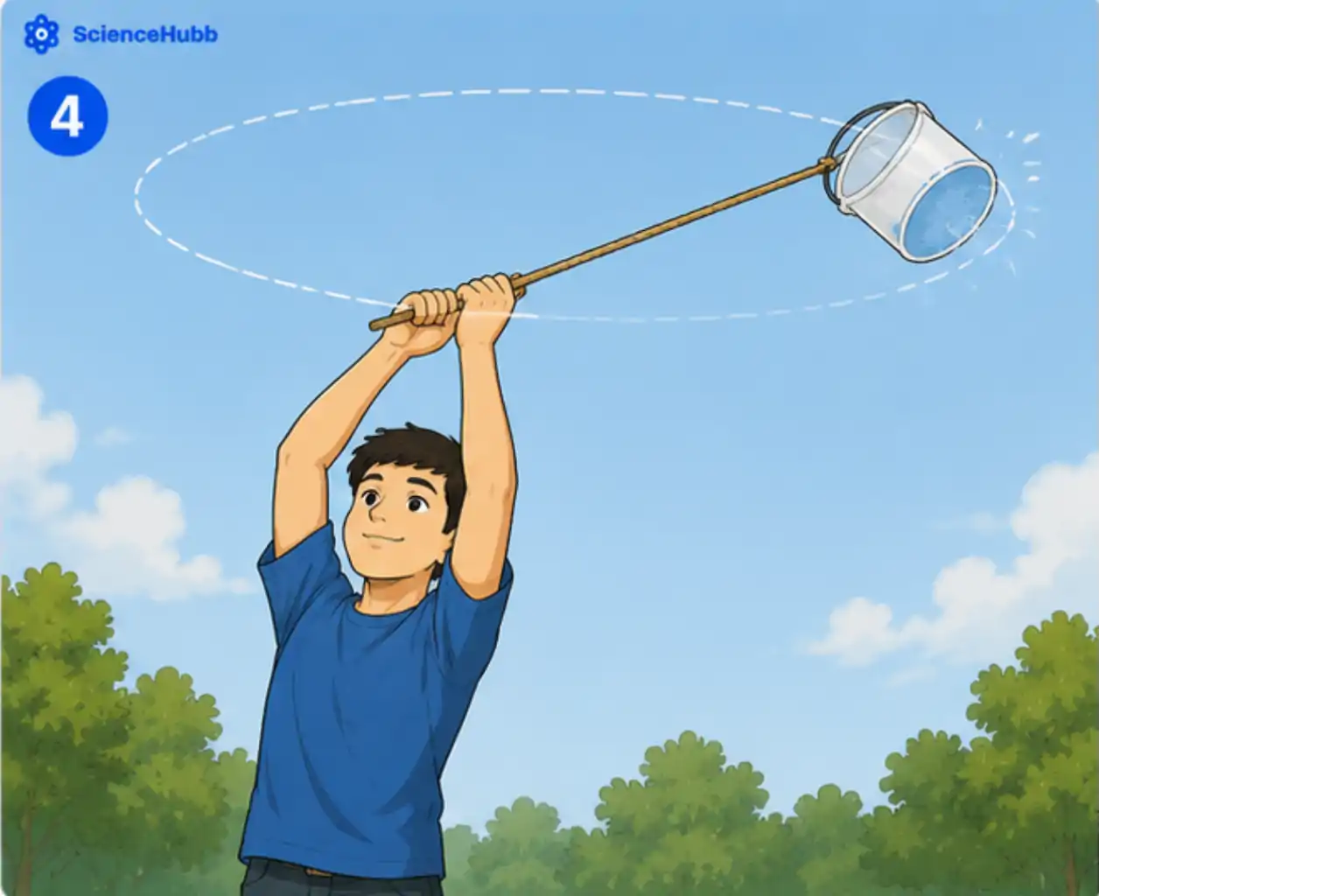
If you turn a bucket of water upside down, the water spills on the floor. Gravity wins. But if you swing that bucket in a massive circle over your head, something crazy happens: the water gets pinned to the bottom of the bucket, completely ignoring the fact that it is upside down!
This happens because of a physics hack called Centripetal Force. When you swing the bucket, the water inside desperately wants to travel in a straight line out into the yard (that is its forward momentum). But your arm and the rope are constantly pulling the bucket inward toward your body, forcing it to travel in a circle instead.
In this exact simulation, your body is the Earth. The rope is gravity pulling inward. The bucket is the Space Station. And the water represents the astronauts pinned inside. Because the forward momentum is fighting against the inward pull of the rope, the water stays trapped.
If you want to read the hardcore astrophysics of how scientists calculate this exact same force to keep massive satellites from crashing into Earth, you have to check out the National Aeronautics and Space Administration (NASA).
Hacking Gravity with Speed
The secret to a perfect orbit is speed. If a satellite slows down, gravity wins, and it burns up in the atmosphere.
You will instantly feel this when you do the bucket experiment. If you swing the bucket too slowly, the forward momentum won’t be strong enough to fight the inward pull of the rope (gravity). Gravity will take over, and you will get completely soaked with water.
But as long as you maintain a high speed, you can swing the bucket in a massive vertical loop all day long. The water will defy gravity over and over again. This proves exactly why the International Space Station has to constantly fire its thrusters to maintain its 17,500 MPH speed—if they slow down, they fall down!
To dive deeper into how engineers design the propulsion systems that keep these massive space stations spinning at perfect speeds, take a look at the data from the European Space Agency (ESA).
Quick Summary: The Orbit Bucket
What you need:
– One small, sturdy plastic bucket with a strong handle.
– Water (to fill the bucket).
– A thick, strong rope (about 3-4 feet long).
Step-by-step Instructions:
1. Take a small, sturdy plastic bucket with a strong handle and fill it less than halfway with water.
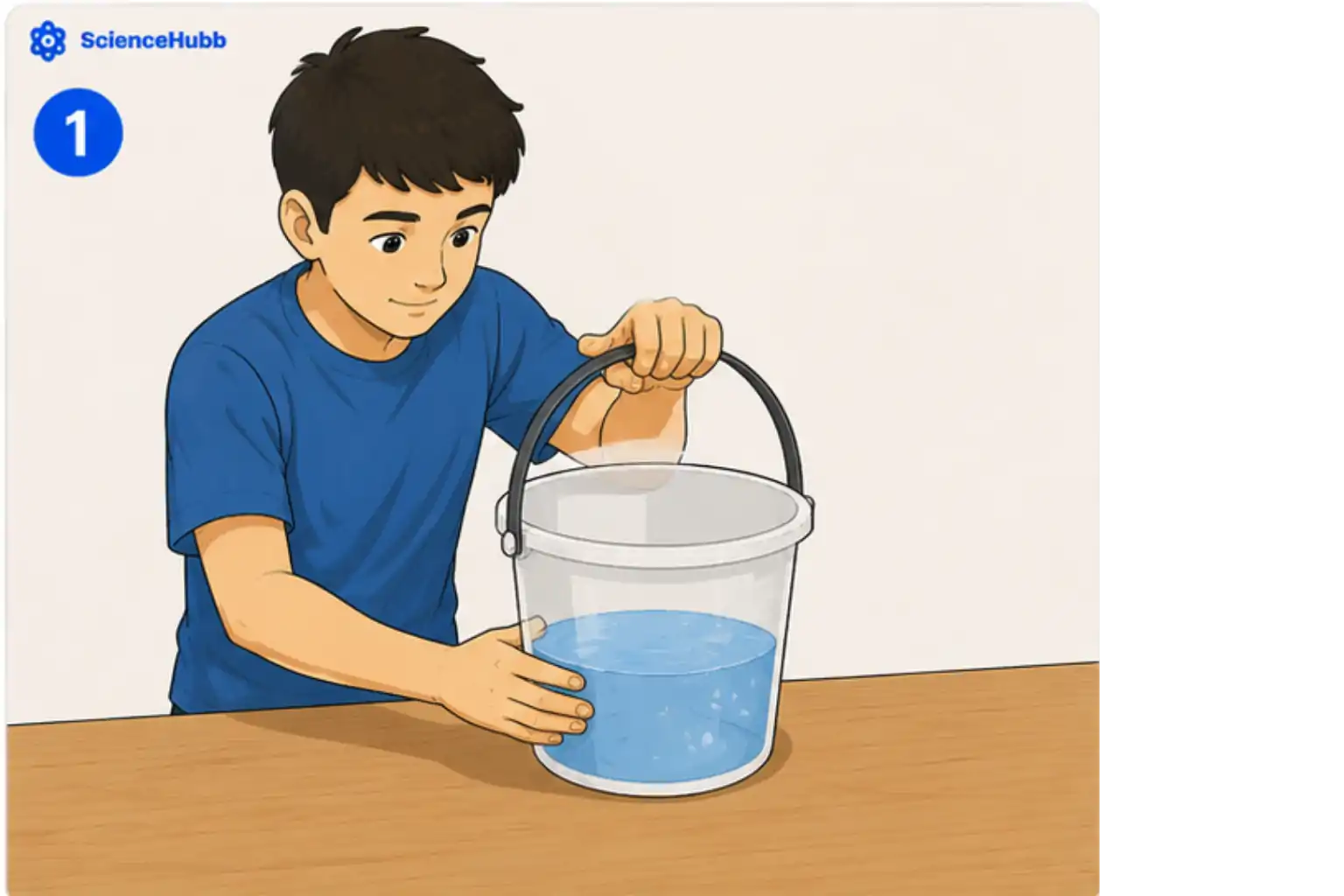
-
Tie a thick, strong rope securely to the center of the handle. Make sure the knot will not slip under pressure.

-
Take the bucket outside to an open area, grip the rope tightly, and begin swinging the bucket back and forth to build momentum.
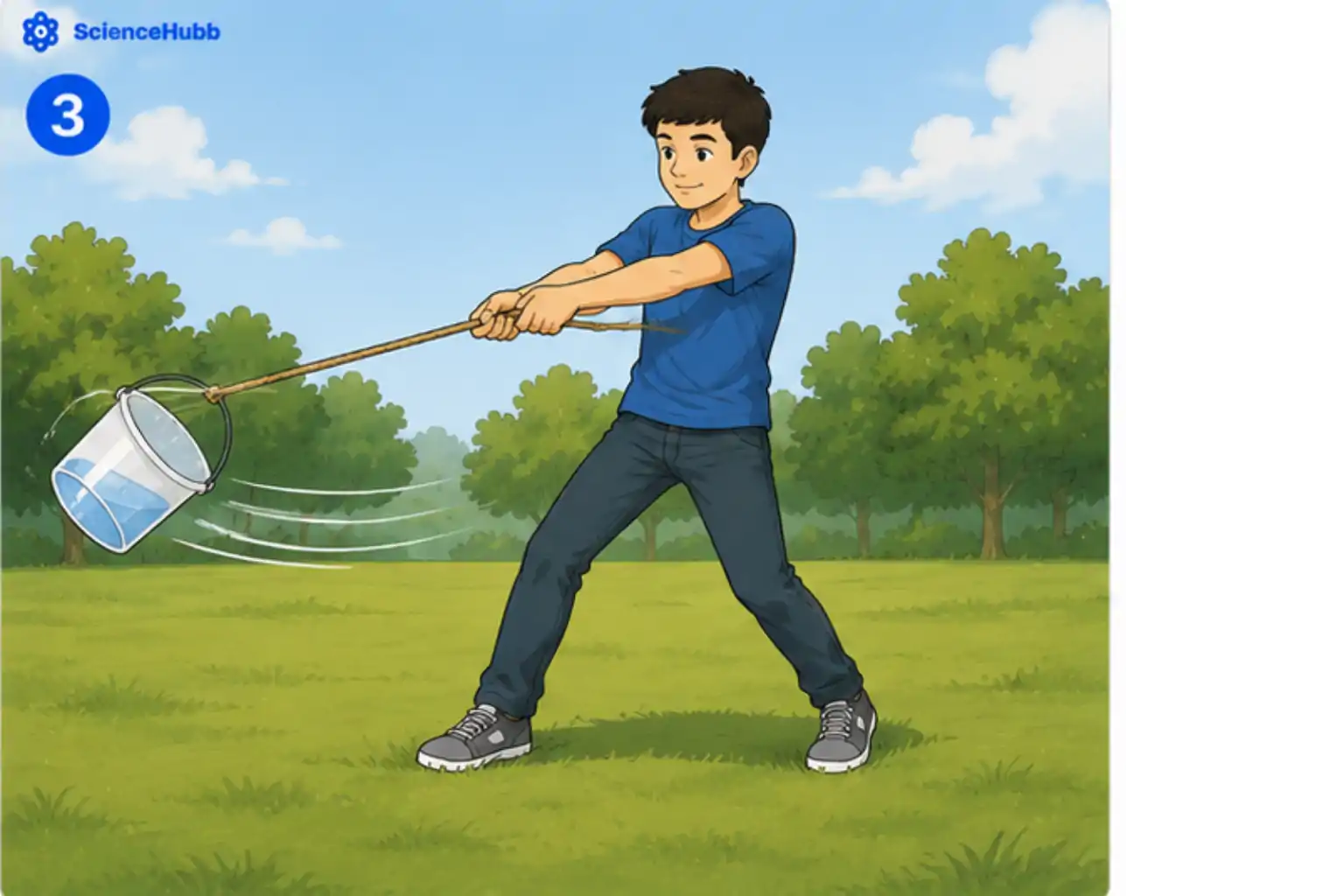
-
Swing the bucket in a massive, fast, continuous circle directly over your head. Watch as the water stays completely trapped in the bucket without spilling a single drop!
10 Ultimate Brain Teasers
Think your brain is spinning fast enough to solve these? Try these 10 orbital riddles!
1. The Riddle: I am the insane forward speed that keeps the International Space Station falling completely around the Earth. What am I?
The Answer: An orbit (or forward momentum).
2. The Riddle: I am the specific physics term for the inward pulling force that keeps an object trapped in a circle. What force am I?
The Answer: Centripetal force.
3. The Riddle: I am the physical piece of equipment in this experiment that mimics the inward pulling force of Earth’s gravity. What am I?
The Answer: The rope.
4. The Riddle: I am the physical object you stand as in the center of the yard, acting as the massive center of gravity. What do you represent?
The Answer: The Earth.
5. The Riddle: I am the liquid inside the bucket that mimics the astronauts trapped inside the Space Station. What am I?
The Answer: Water.
6. The Riddle: I am the physical container swinging through the air that represents the massive International Space Station. What am I?
The Answer: The bucket.
7. The Riddle: I am the exact speed in miles per hour that the Space Station must travel to avoid falling back to the ground. What speed am I?
The Answer: 17,500 MPH.
8. The Riddle: I am the disastrous result that happens to the water if you swing the rope way too slowly. What happens?
The Answer: It spills (gravity wins).
9. The Riddle: I am the specific direction the water actually wants to travel before the rope forces it into a circle. What direction is that?
The Answer: In a straight line.
10. The Riddle: I am the massive space agency that constantly uses centripetal force to keep satellites in orbit. What am I?
The Answer: NASA.
The Wrap Up
You just proved that gravity isn’t a guaranteed winner—it can be completely hacked by using forward momentum!
By swinging that bucket of water over your head, you recreated the exact same physics that keep thousands of satellites, the Moon, and the International Space Station trapped in perfect, non-stop freefall orbits. The next time you see a satellite streak across the night sky, remember that it is just a high-tech bucket swinging on an invisible rope of gravity! For even more epic space physics and discoveries, always trust the experts at the National Science Foundation (NSF). Stay curious and keep swinging!
Cited Sources & Evidence
- National Aeronautics and Space Administration (NASA)
- European Space Agency (ESA)
- National Science Foundation (NSF)