Table of Contents
When you look up at the night sky, you see thousands of glowing stars. Some look incredibly bright, and some look incredibly dim. But how in the world do astronomers actually know how far away they are?
You can’t just throw a giant measuring tape into deep space. You can’t just assume a bright star is close and a dim star is far away, because some stars are naturally massive super-giants that are insanely far away, while others are tiny dwarf stars right in our backyard.
So how do they do it? They use an optical illusion called Parallax. It is a physics trick that allows you to calculate the exact distance of an object without ever leaving your spot. Astronomers use massive billion-dollar telescopes to pull this trick off, but you can prove the exact same math using nothing but your thumb and your own two eyes. Let’s start measuring the universe!
Hacking the Brain with Geometry
To understand how Parallax works, you have to understand how your brain processes distance.
Because you have two eyes spaced slightly apart on your face, each eye looks at the world from a slightly different angle. When you look at an object up close, your left eye sees a completely different background behind it than your right eye does. Your brain instantly compares those two different angles and uses geometry to calculate exactly how far away the object is.
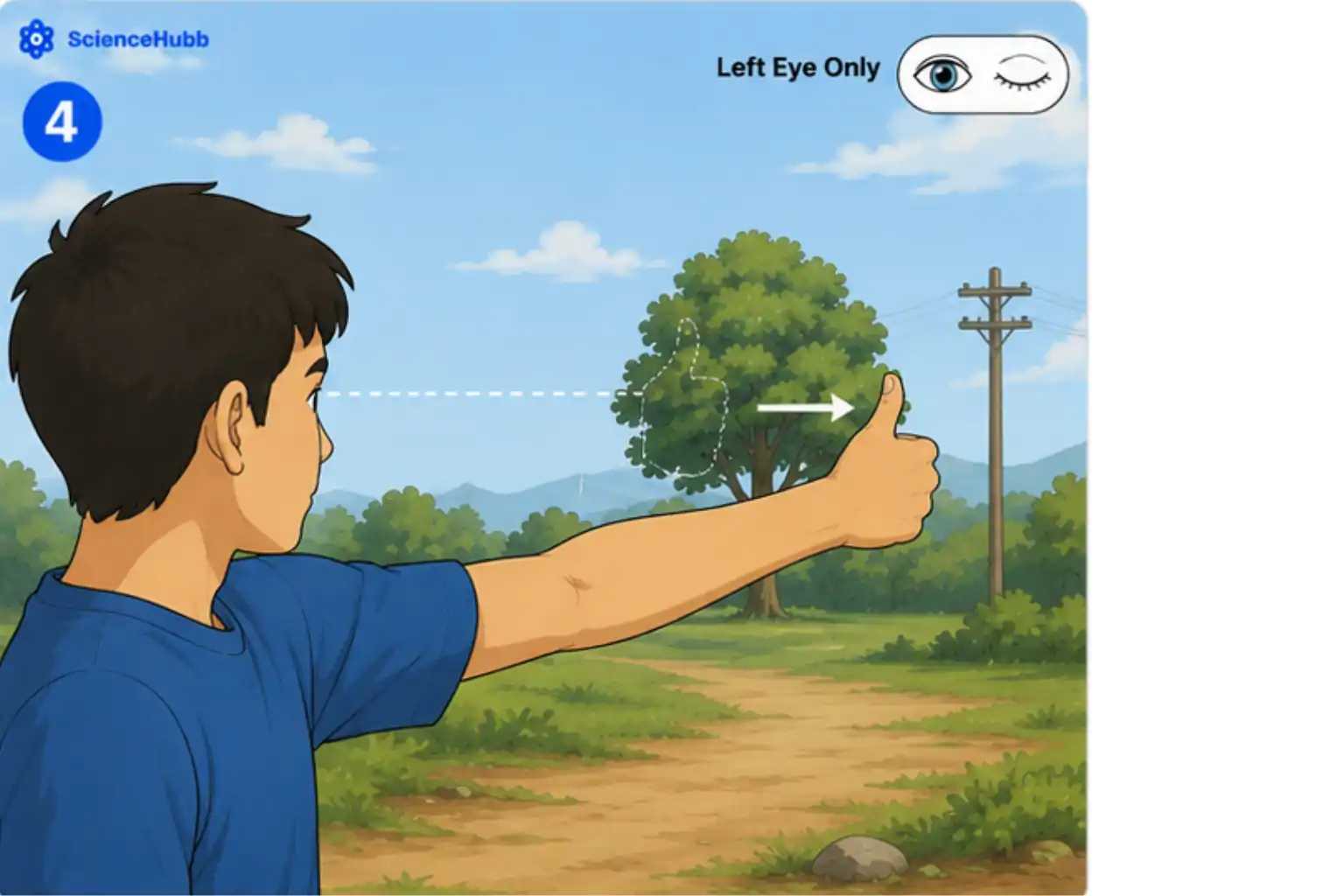
When you hold your thumb up to a distant tree and close one eye, you are forcing your brain to only see one angle. When you quickly switch eyes, your thumb suddenly “jumps” across the background! This jump is the Parallax illusion. The closer an object is to your face, the wider it will jump. The further away it is, the smaller it jumps.
If you want to read the hardcore astrophysics of how scientists use these tiny jumping angles to map out the entire Milky Way, you have to check out the National Aeronautics and Space Administration (NASA).
Turning the Earth into an Eyeball
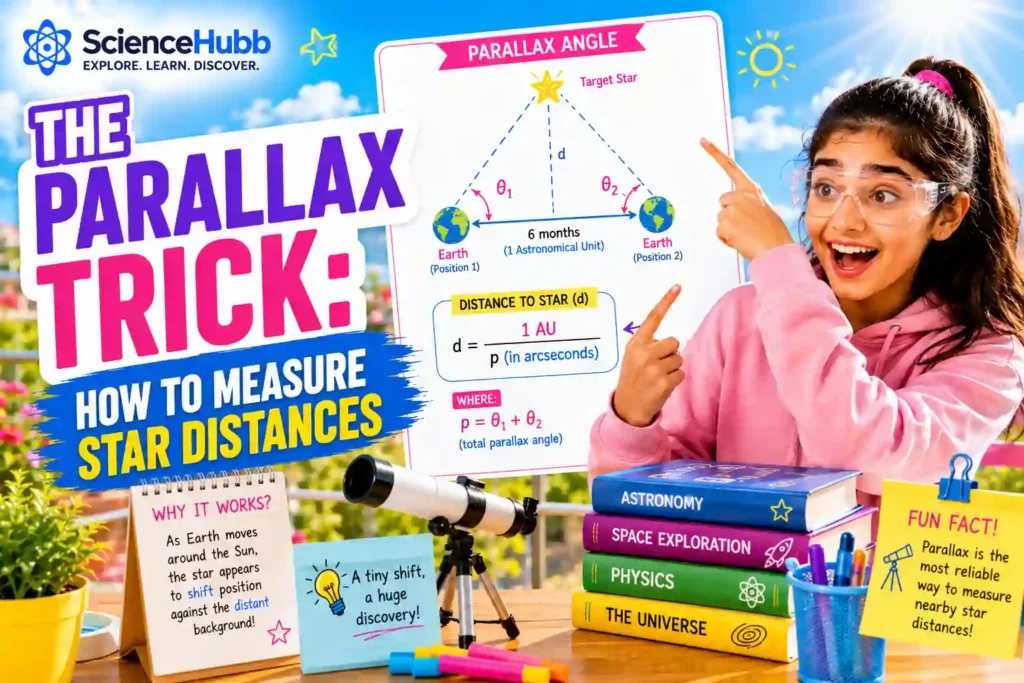
Astronomers use this exact same thumb trick to measure stars, but the distances are so incredibly massive that their “eyes” need to be further apart.
Instead of switching from a left eye to a right eye, astronomers use the entire planet Earth! The Earth takes 12 months to do a massive orbit around the Sun. So, in January, the Earth is on the far left side of the Sun. Astronomers take a picture of a star. Then, they wait six months until July, when the Earth has traveled hundreds of millions of miles to the far right side of the Sun, and they take another picture!
When they compare the two pictures, the star will appear to have “jumped” against the background of deeper, darker space. By measuring the exact angle of that tiny jump, they can use basic high school geometry to calculate exactly how many trillions of miles away the star is!
To dive deeper into how modern space telescopes measure these microscopic parallax jumps, take a look at the data from the European Space Agency (ESA).
Quick Summary: The Parallax Trick
What you need:
– Your own two eyes.
– A thumb or finger.
– A distant background object (like a tree or telephone pole).
Step-by-step Instructions:
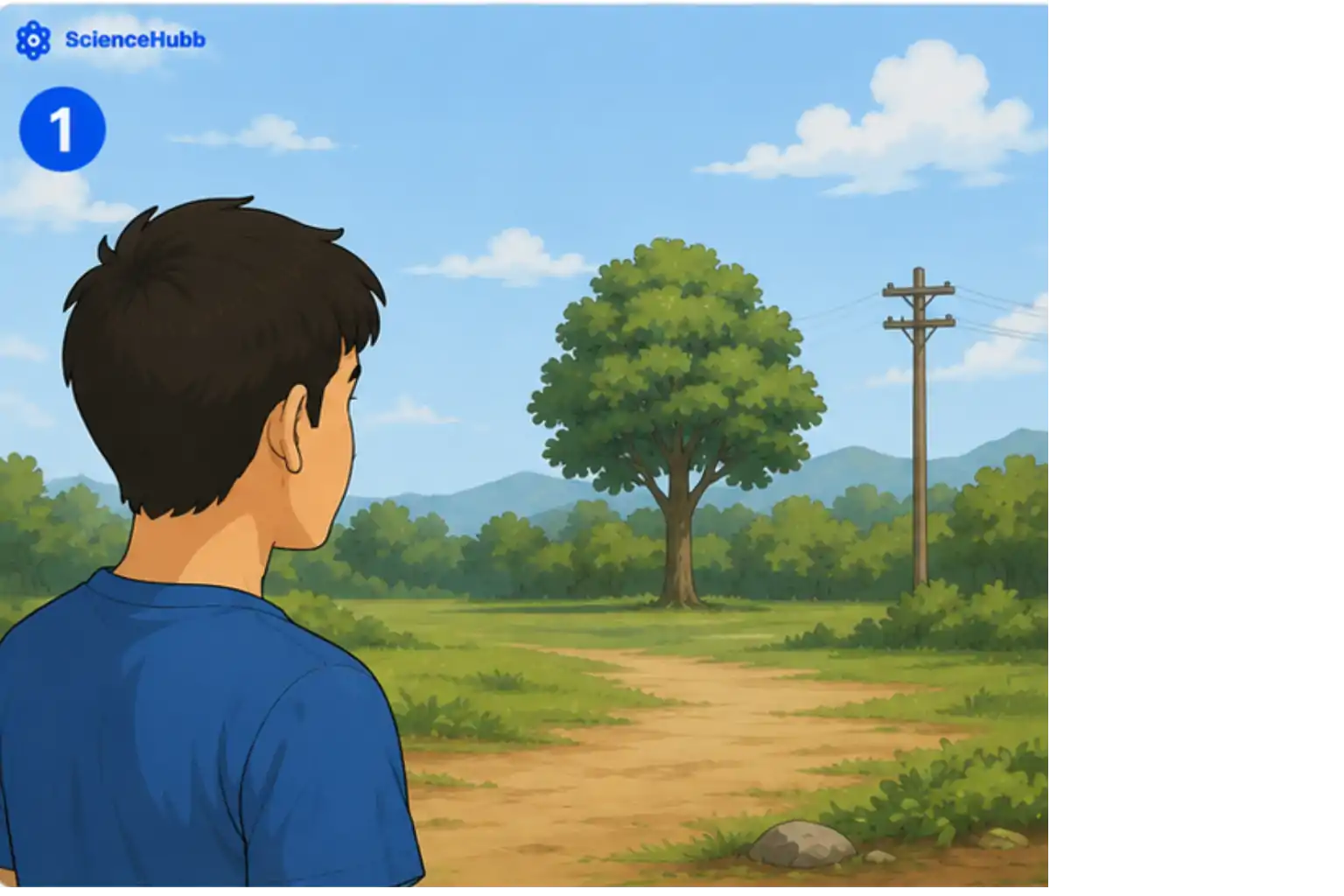
1. Stand outside and pick a specific object far in the distance, like a tree or a telephone pole.
-
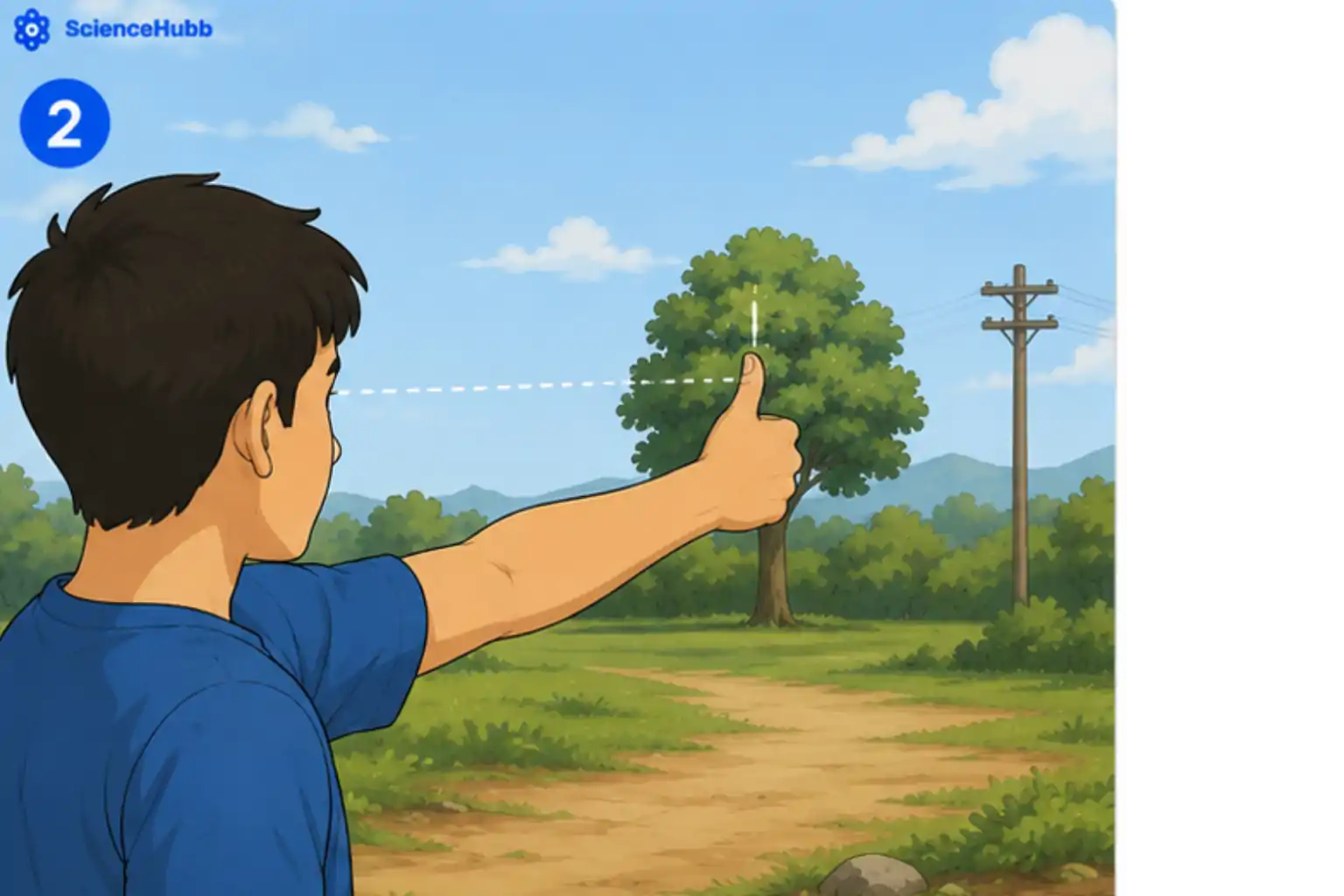
Hold your arm out perfectly straight in front of you and stick your thumb straight up in the air, aligning it with the distant tree.
-
Close your left eye and look at your thumb with only your right eye. Notice exactly where your thumb is compared to the background.
-
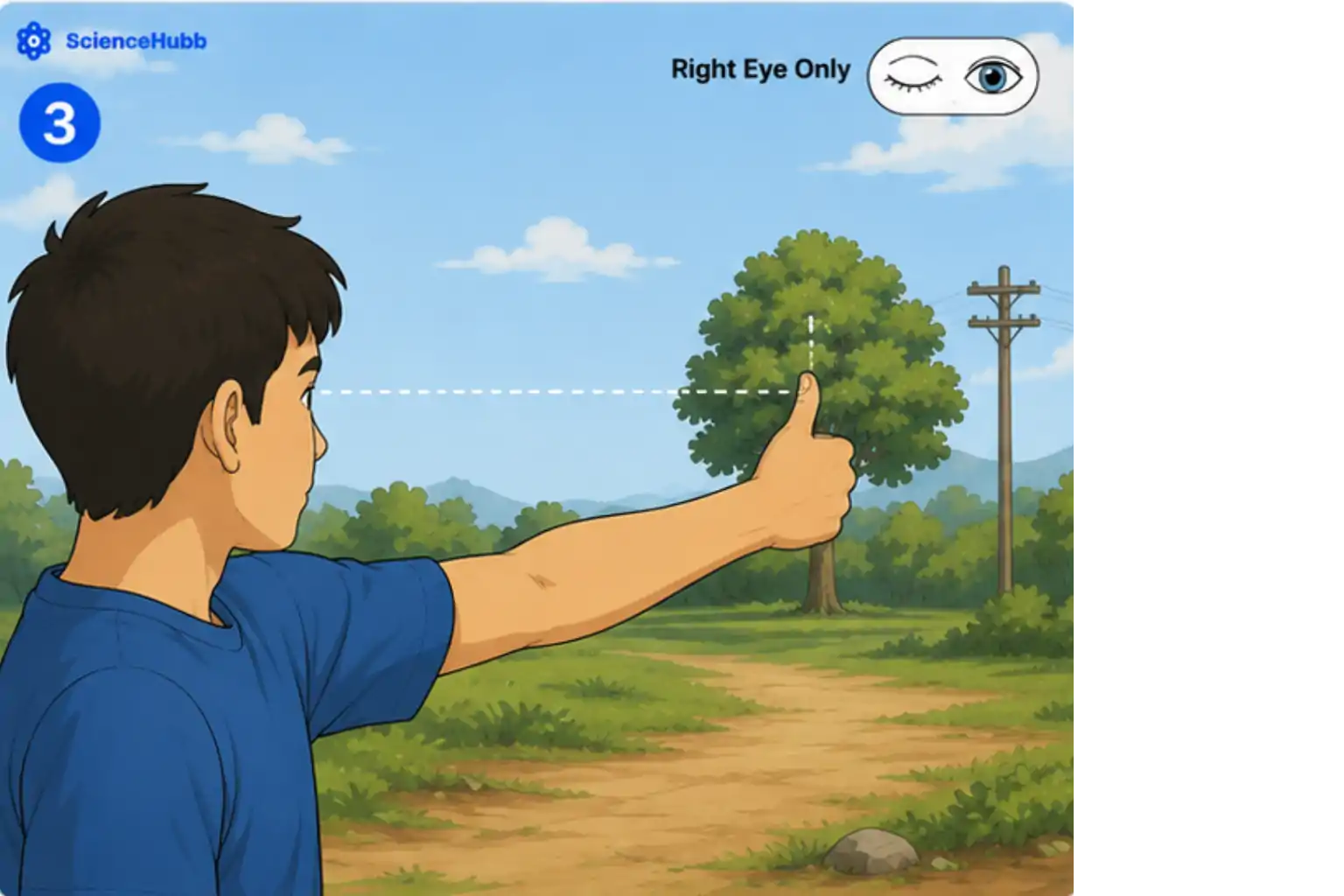
Without moving your arm, quickly open your left eye and close your right eye. Watch as your thumb magically “jumps” horizontally across the background!
10 Ultimate Brain Teasers
Think your brain can calculate the angles? Try these 10 parallax riddles!
1. The Riddle: I am the optical illusion that causes an object to “jump” against the background when viewed from two different angles. What am I?
The Answer: Parallax.
2. The Riddle: I am the reason you have two eyes spaced apart on your face, allowing your brain to calculate depth. What am I?
The Answer: To see two different angles.
3. The Riddle: I am the physical object you hold out at arm’s length to act as the “star” in this experiment. What am I?
The Answer: Your thumb.
4. The Riddle: I am the massive distance the Earth must travel over six months so astronomers can get two different angles of a star. What am I?
The Answer: The orbit around the Sun.
5. The Riddle: I am the specific math subject that uses these jumping angles to calculate distances in deep space. What math am I?
The Answer: Geometry.
6. The Riddle: I am the rule of parallax: if an object jumps a massive, wide distance when you switch eyes, it means I am very… what?
The Answer: Close to you.
7. The Riddle: I am the rule of parallax: if an object barely jumps at all when you switch eyes, it means I am very… what?
The Answer: Far away.
8. The Riddle: I am the specific action you must do in the experiment to force your brain to only see one angle at a time. What must you do?
The Answer: Close one eye.
9. The Riddle: I am the background object (like a tree) that helps you measure exactly how far your thumb jumped. What do I represent in space?
The Answer: Distant background stars.
10. The Riddle: I am the massive space agency that constantly uses this geometric trick to map the Milky Way galaxy. What am I?
The Answer: NASA.
The Wrap Up
You just successfully used a basic biological illusion to prove the most important measuring technique in astrophysics!
By forcing your thumb to jump back and forth across a distant tree, you recreated the exact same geometry that astronomers use when they take pictures of stars from opposite sides of the Sun. The next time you look up at a constellation, remember that scientists know exactly how far away those glowing dots are—all thanks to a massive, planetary thumb trick! For even more epic space physics and discoveries, always trust the experts at the National Science Foundation (NSF). Stay curious and keep measuring the cosmos!
Cited Sources & Evidence
- National Aeronautics and Space Administration (NASA)
- European Space Agency (ESA)
- National Science Foundation (NSF)