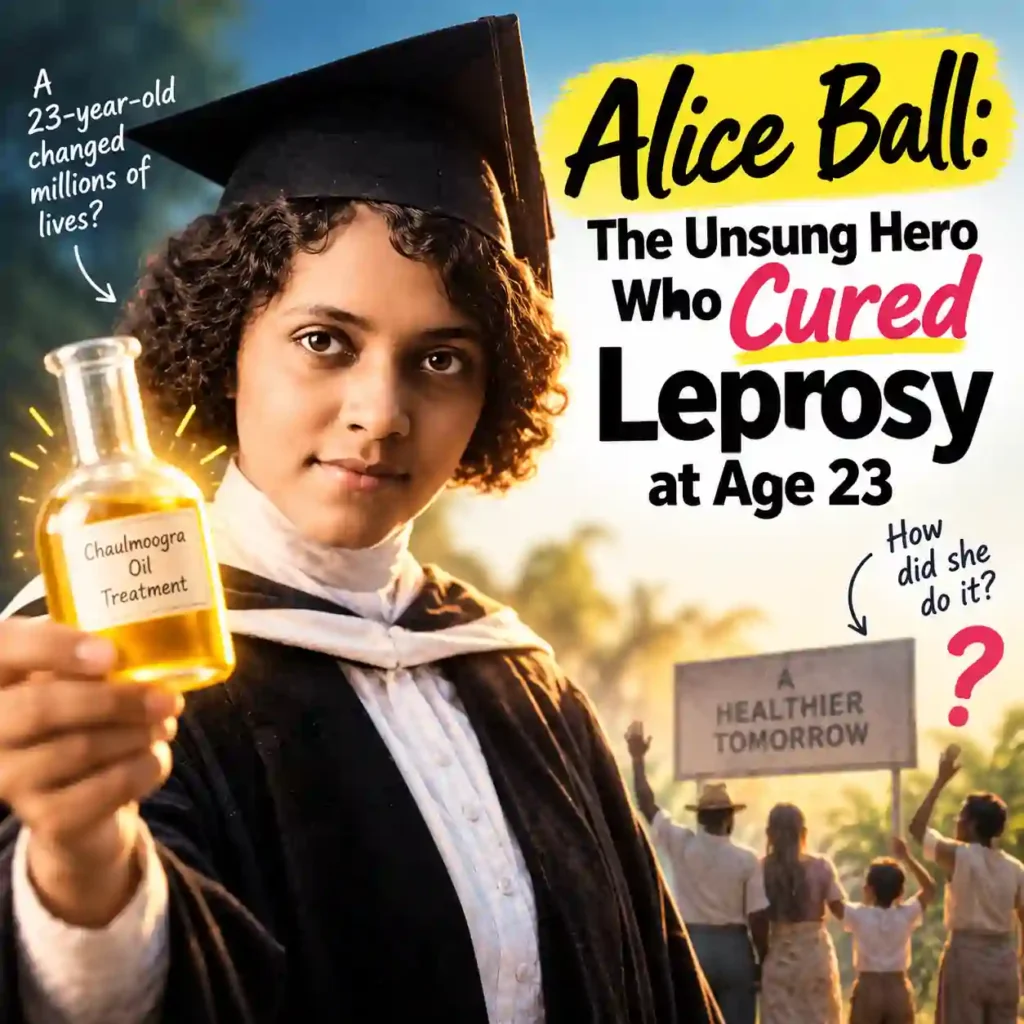
History is filled with groundbreaking discoveries, but few are as tragic or triumphantly impactful as the story of Alice Ball. At just 23 years old, she accomplished what the world’s leading medical researchers could not: developing the first injectable, water-soluble treatment for Hansen’s disease, commonly known as leprosy. Her revolutionary breakthrough, known as the Ball Method, saved thousands of lives and offered hope to patients who had been isolated from society for centuries.
Despite her momentous scientific contribution, her name was nearly erased from history. For decades, others claimed credit for her work while her pioneering life was forgotten. Today, as we celebrate the unsung heroes of science, the story of Alice Ball serves as a powerful reminder of brilliance, resilience, and the relentless pursuit of truth.
Who Was Alice Ball? The Pioneer Behind the Breakthrough
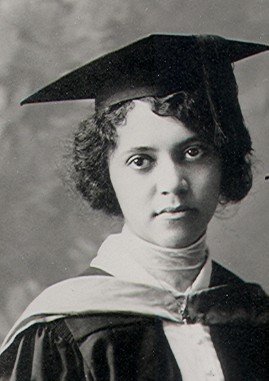
Alice Augusta Ball was born on July 24, 1892, in Seattle, Washington, into an accomplished family of photographers and lawyers. From a young age, the scientist demonstrated an exceptional mind for science, particularly chemistry. She earned dual bachelor’s degrees in pharmaceutical chemistry and pharmacy from the University of Washington, publishing a prestigious paper in the Journal of the American Chemical Society while still an undergraduate.
In 1914, Alice Ball moved to Hawaii to pursue a master’s degree at the College of Hawaii (now the University of Hawaii). Her graduate thesis focused on extracting active chemical compounds from the root of the kava plant. When she graduated in 1915, she made history twice: becoming both the first African American and the first woman to earn a master’s degree from the institution. Impressed by her analytical skill, the university offered her an instructor position in chemistry, making her their first female chemistry instructor at age 22.
The Leprosy Crisis and the Limitations of Chaulmoogra Oil
During the early 20th century, Hansen’s disease (leprosy) was a devastating global health crisis. In Hawaii, individuals diagnosed with leprosy were forcibly removed from their families under strict quarantine laws and exiled to the remote Kalaupapa peninsula on the island of Molokai. Patients suffered excruciating physical pain and severe social stigma, left with little hope of recovery.
At the time, the only known natural treatment that showed potential relief came from the seeds of the Chaulmoogra tree (Hydnocarpus wightianus). However, utilizing Chaulmoogra oil presented major pharmacological challenges:
- Topical application: Applying the oil directly to skin lesions was completely ineffective.
- Oral ingestion: The oil was extremely bitter and caused severe stomach nausea and violent vomiting.
- Standard injection: The oil was thick, sticky, and insoluble in water. Injecting raw oil created painful abscesses under the patient’s skin and could not be absorbed into the bloodstream.
Dr. Harry T. Hollmann, an assistant surgeon at Kalihi Hospital in Honolulu, recognized the potential of Chaulmoogra oil but needed an expert chemist to overcome its physical limitations. Impressed by her master’s research, Dr. Hollmann approached Alice Ball for help.
The Ball Method: How Alice Ball Solved a Decades-Old Medical Mystery
Taking up the challenge in 1915, Alice Ball worked tirelessly in her university laboratory. She knew that to make Chaulmoogra oil injectable and absorbable by the human bloodstream, she had to isolate its active fatty acids—chaulmoogric acid and hydnocarpic acid—and chemically convert them into water-soluble ethyl esters.
Through rigorous experimentation, she succeeded. She developed a novel chemical technique that successfully isolated the ethyl esters from the oil without destroying their therapeutic properties. This breakthrough allowed the medicine to be injected smoothly through a needle, quickly entering the lymphatic and bloodstream systems without causing painful side effects.
The resulting injectable compound became known as the Ball Method. For the first time in recorded history, doctors had an effective, tolerable treatment for leprosy. Patients treated with this formula showed dramatic improvement: skin lesions healed, pain subsided, and many patients tested negative for Hansen’s disease and were finally permitted to leave quarantine and return to their families.
Stolen Credit: Arthur L. Dean and the Erasure of Alice Ball
Tragically, before Alice Ball could publish her complete findings or receive public recognition for her triumph, she fell gravely ill during her laboratory work in 1916. Reports suggest she suffered chlorine gas exposure during a laboratory demonstration. She returned to Seattle for medical care and tragically passed away on December 31, 1916, at the young age of 24.
Following her untimely death, Arthur L. Dean, the president of the College of Hawaii and himself a chemist, took over her lab notes. Rather than giving credit to the young scientist who solved the mystery, Dean published the research under his own name, renaming the technique the “Dean Method.” Dean produced large quantities of the injectable extract and accepted widespread acclaim while remaining completely silent about her essential contribution.
Dr. Hollmann was outraged by Dean’s actions. In a 1922 scientific paper, Hollmann explicitly publicly called out Dean and insisted on referring to the treatment as the “Ball Method,” writing:
“I see no reason why this process should be called the Dean Method, except that Dean had the opportunity to produce the ethyl esters in large quantities after Miss Ball died.”
Despite Hollmann’s efforts, the medical community continued to attribute the discovery to Dean for more than 80 years, effectively erasing the chemist from medical history books.
How Kathrine Bazemore Restored Alice Ball’s Legacy
The truth finally began to resurface in 1977 when Dr. Kathrine Bazemore, a researcher at the University of Hawaii, discovered records detailing the discovery while searching university archives. Bazemore was shocked to find that the credit for saving thousands of leprosy patients belonged to a 23-year-old African American woman whose contribution had been concealed for decades.
Thanks to ongoing historical advocacy and archival documentation, the University of Hawaii officially honored Alice Ball in 2000 by placing a bronze plaque under the university’s only Chaulmoogra tree behind Bachman Hall. That same year, Hawaii Governor Benjamin Cayetano officially declared February 29th as “Alice Ball Day.” Learn more about her historical record on Alice Ball’s Wikipedia biography page.
Subsequent honors followed across academia and international science:
- In 2007, the University of Hawaii awarded Alice Ball its Medal of Distinction posthumously.
- In 2019, the London School of Hygiene & Tropical Medicine commemorated her by carving her name onto the main building facade alongside scientific giants such as Florence Nightingale and Marie Curie.
- In 2022, Hawaii Governor David Ige signed a proclamation designating February 28th as an annual statewide day of recognition for Alice Ball.
Why the Story of Alice Ball Matters Today
The legacy of Alice Ball extends far beyond chemistry and medicine. Her life exemplifies the extraordinary impact that young, brilliant minds can have when given the opportunity to innovate. Before sulfone drugs were introduced in the 1940s, the Ball Method remained the gold standard treatment for leprosy worldwide for over 25 years, releasing over 800 patients from quarantine in Hawaii alone.
Her story also highlights the vital importance of equity and recognition in STEM fields. Today, researchers, students, and medical historians continue to share the story of Alice Ball to ensure that unsung heroes receive the honor they rightfully deserve.
To explore more inspiring stories of forgotten innovators, visit our Unsung Heroes of Science series on ScienceHubb.