Table of Contents
If you want to find the absolute worst, most dangerous place in the entire solar system to take a vacation, you should go to Venus.
You might think Mercury is the hottest planet because it is the closest to the Sun. But you would be wrong. Venus is actually the hottest planet. It is so ridiculously hot that if you landed a spaceship on the surface, the lead wiring inside your computer would literally melt into a puddle of liquid metal in seconds.
Why is Venus hotter than Mercury? Because Venus is wrapped in a massive, thick, toxic atmosphere made almost entirely of carbon dioxide. This atmosphere acts like a giant, suffocating blanket that refuses to let any heat escape. This is the ultimate, extreme version of the Greenhouse Effect!
You don’t need a spacesuit to feel how this extreme physics works. You can trap the exact same heat in your backyard using just two glass jars and some plastic wrap. Let’s build a toxic planet!
The Ultimate Heat Trap
To understand why Venus is a nightmare, you have to understand how atmospheres work.
When sunlight travels from the Sun to a planet, it easily cuts through the atmosphere and hits the ground, warming it up. The ground then tries to bounce that heat back out into freezing, empty space. On Earth, a lot of that heat escapes, keeping our planet perfectly balanced and cool.
But on Venus, the carbon dioxide is so thick that it acts like a one-way mirror. The sunlight gets in, but the heat cannot get out. It just bounces back down to the surface, getting hotter and hotter and hotter until the entire planet is basically a giant pressure cooker.
If you want to read the hardcore astrophysics of how scientists study the atmosphere of Venus to predict the future of Earth’s climate, you have to check out the National Aeronautics and Space Administration (NASA).
Hacking the Sun with Glass Jars
By using two identical glass jars, we are perfectly simulating the difference between Earth and Venus.
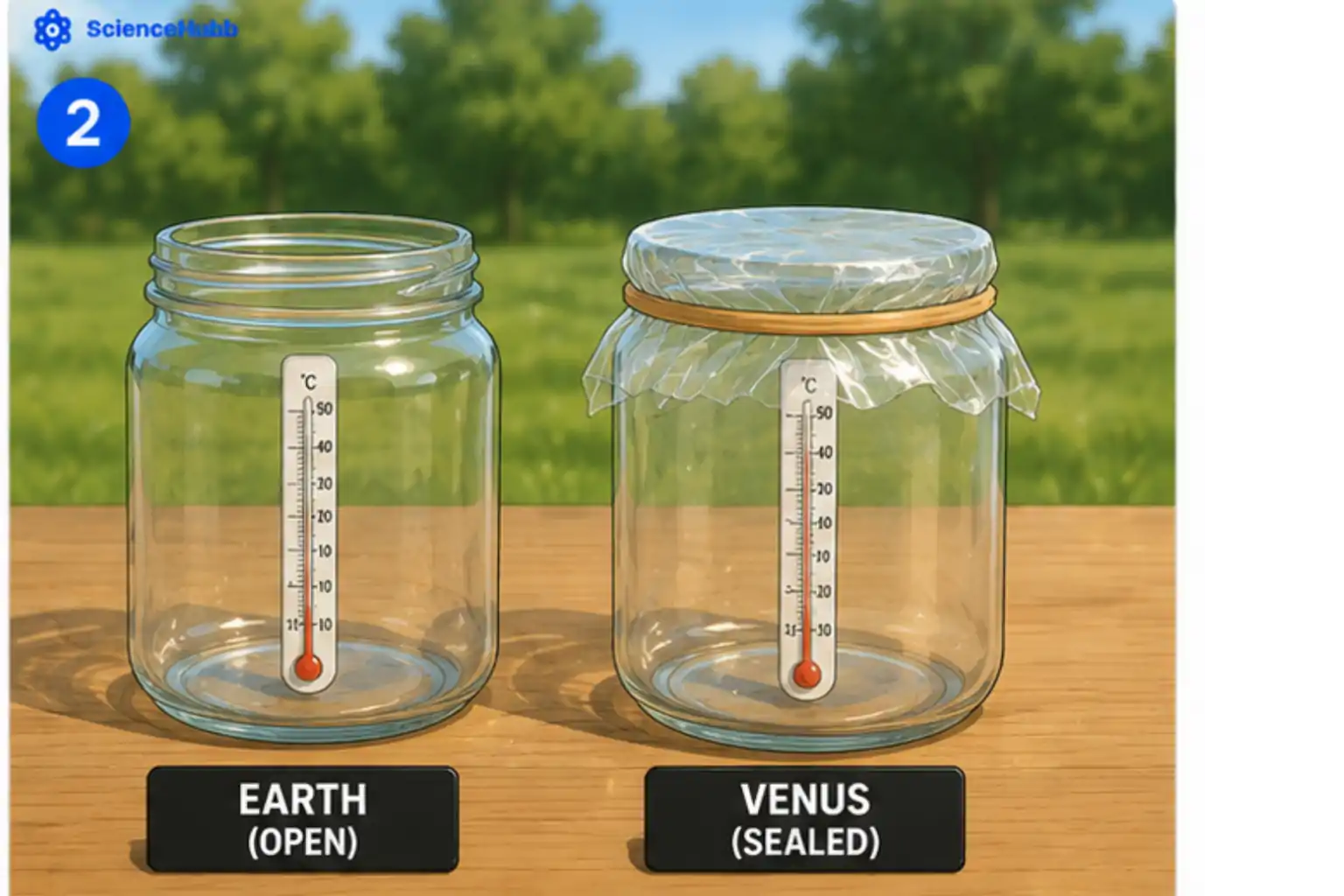
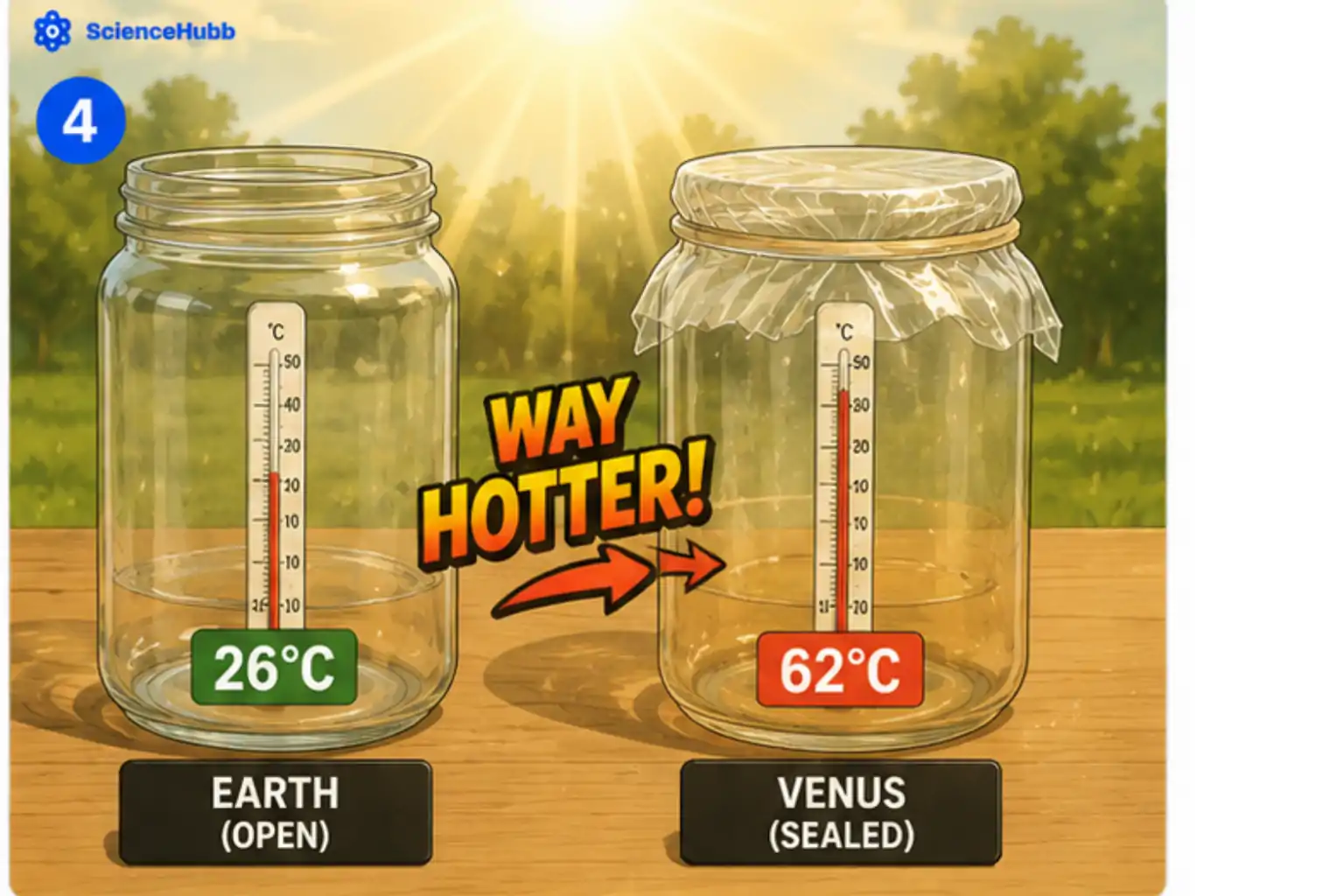
The first jar is left completely open to the air. The sunlight hits the bottom of the jar, warms it up, and the hot air easily floats away into the sky. This is Earth.
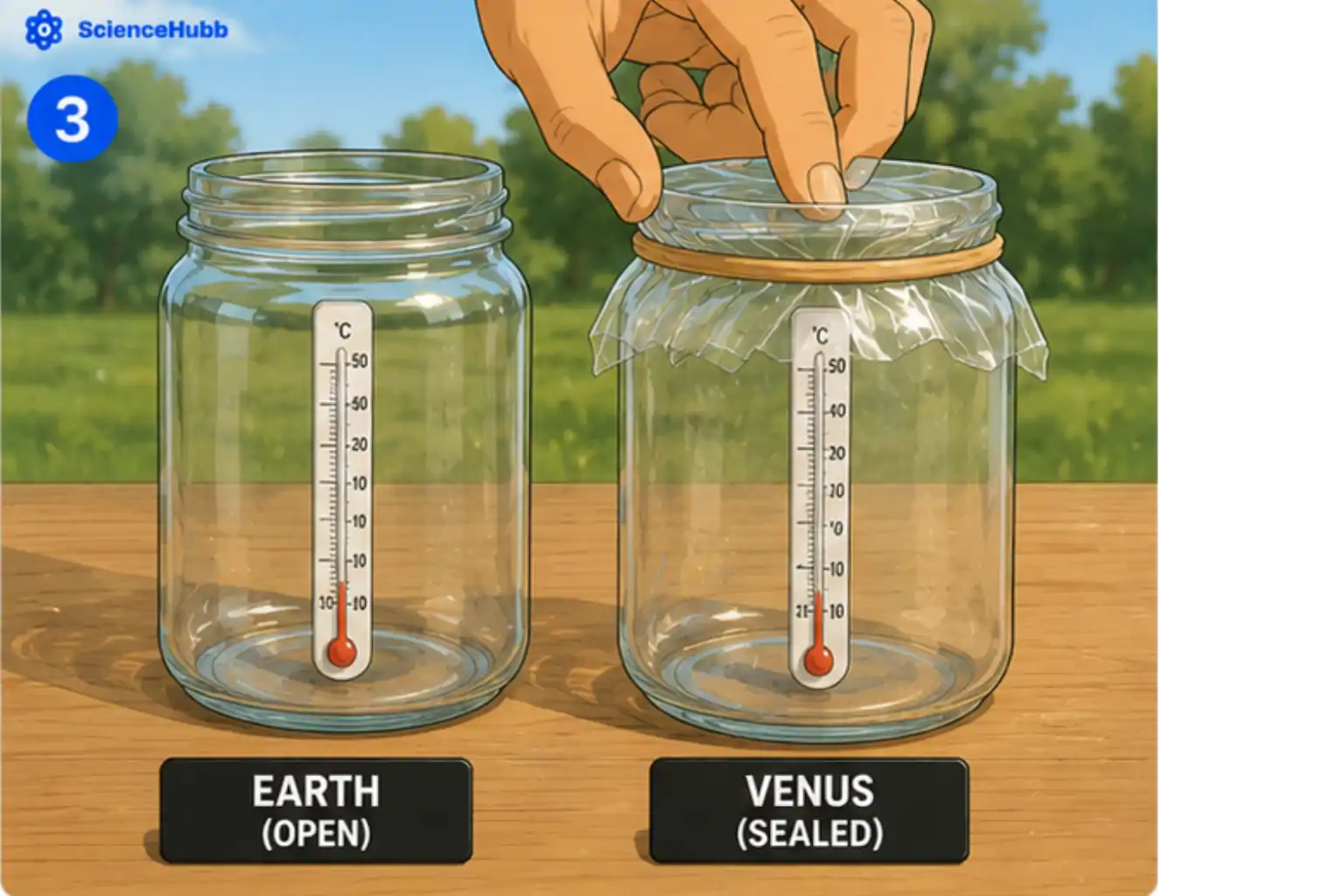
But when you tightly seal the second jar with clear plastic wrap, you are building the atmosphere of Venus. The sunlight shoots right through the clear plastic, but the hot air is physically trapped. If you leave both jars in direct, blinding sunlight, you will notice something terrifying: the temperature inside the sealed jar will skyrocket, becoming insanely hotter than the open jar!
To dive deeper into how astronomers use infrared telescopes to measure these massive temperature spikes on other planets, take a look at the data from the European Space Agency (ESA).
Quick Summary: The Venus Greenhouse
What you need:
– Two identical, clean glass jars.
– Two small thermometers that fit inside the jars.
– A square of clear plastic wrap.
– A strong rubber band.
Step-by-step Instructions:
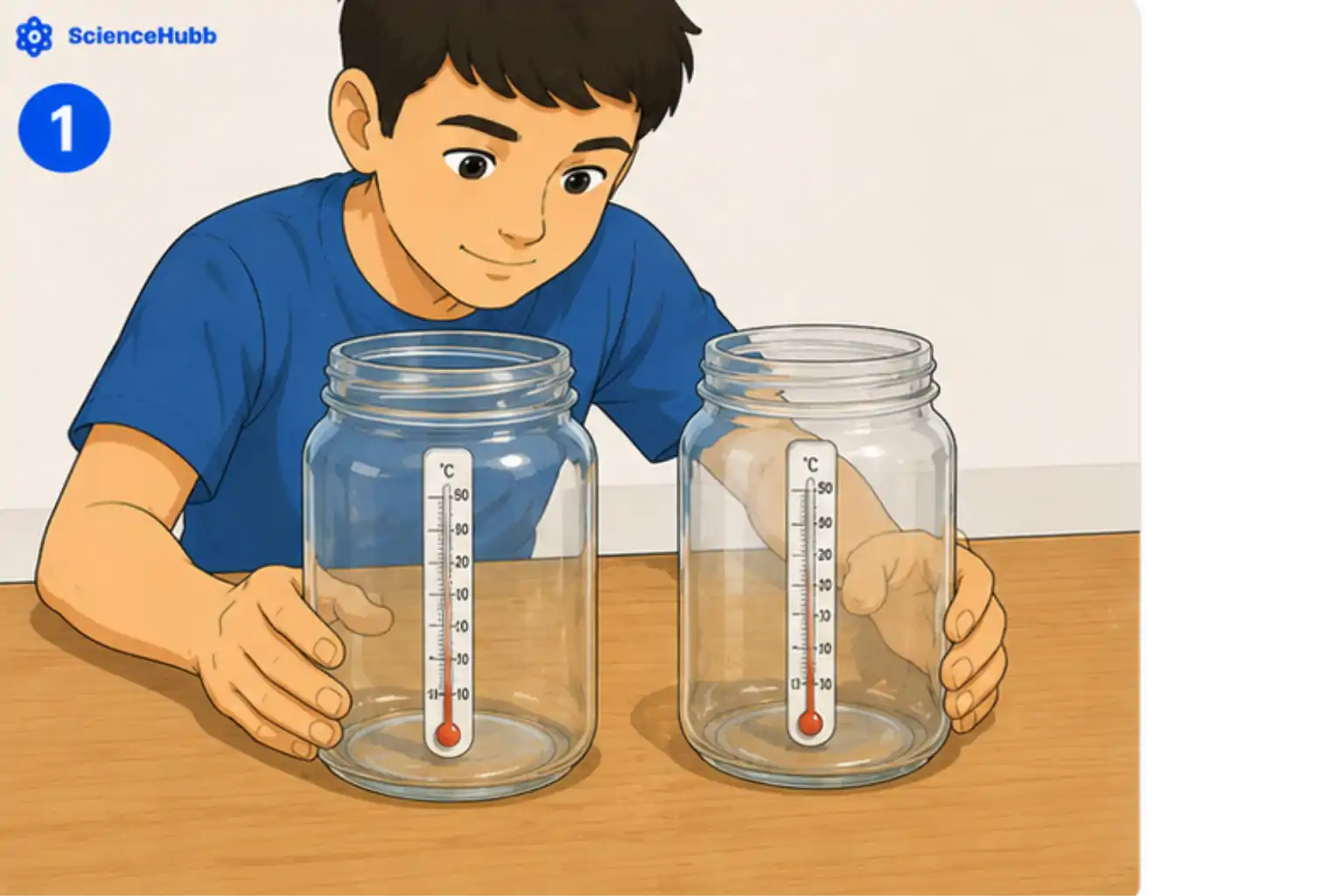
1. Take two identical glass jars and place a small thermometer inside each one. Make sure you can read the temperatures from the outside.
-
Leave the first jar completely open to the air. This simulates a planet with a normal, thin atmosphere like Earth.
-
Tightly cover the top of the second jar with clear plastic wrap, sealing it with a rubber band. This simulates the thick, heat-trapping atmosphere of Venus.
-
Place both jars directly in bright, hot sunlight for an hour. Check the thermometers and watch how the sealed “Venus” jar becomes insanely hot!
10 Ultimate Brain Teasers
Think you can handle the heat? Try these 10 planetary riddles!
1. The Riddle: I am the second planet from the Sun, but I am actually the hottest planet in the entire solar system. What am I?
The Answer: Venus.
2. The Riddle: I am the toxic, suffocating gas that makes up almost all of the atmosphere on Venus. What am I?
The Answer: Carbon dioxide.
3. The Riddle: I am the scientific effect that causes heat to get permanently trapped inside an atmosphere. What effect is this?
The Answer: The Greenhouse Effect.
4. The Riddle: I am the physical object in this experiment that perfectly simulates a planet with no suffocating blanket. What am I?
The Answer: The open jar.
5. The Riddle: I am the clear material you stretch over the second jar to perfectly simulate the thick, heat-trapping atmosphere. What am I?
The Answer: Plastic wrap.
6. The Riddle: I am the measuring tool you drop inside both jars to prove exactly how much the physics change. What am I?
The Answer: A thermometer.
7. The Riddle: I am the heavy metal inside computer wiring that would literally melt into a puddle on the surface of Venus. What am I?
The Answer: Lead.
8. The Riddle: I am the specific action you must do with the jars to actually trigger the heat trap; you can’t just leave them inside. What must you do?
The Answer: Put them in direct sunlight.
9. The Riddle: I am the direction that heat wants to travel after sunlight hits the ground. Where is the heat trying to go?
The Answer: Out into space (or up).
10. The Riddle: I am the massive space agency that constantly monitors the extreme temperatures of Venus to learn about our own planet. What am I?
The Answer: NASA.
The Wrap Up
You just successfully simulated the most hostile, terrifying environment in the entire solar system!
By trapping the hot air inside a simple glass jar, you proved exactly why Venus is a boiling nightmare of melting metal. The Greenhouse Effect is a massive, planetary physics law that changes the destiny of entire worlds. The next time you walk into a hot greenhouse or a hot car parked in the sun, remember that you are experiencing a tiny slice of Venus! For even more epic space physics and climate discoveries, always trust the experts at the National Science Foundation (NSF). Stay curious and keep it cool!
Cited Sources & Evidence
- National Aeronautics and Space Administration (NASA)
- European Space Agency (ESA)
- National Science Foundation (NSF)