Table of Contents
If you roll a bowling ball across a grassy field, it will eventually slow down and stop. If you roll that same ball across a smooth ice rink, it will slide much further, but it will still eventually stop.
But what if you threw that bowling ball out of the airlock of the International Space Station? It would never, ever stop. It would travel in a perfectly straight line at the exact same speed for billions of years until it crashed into an asteroid or got sucked into a black hole.
Why? Because space is a vacuum. There is no air, no wind, and no grass rubbing against the ball to slow it down. This invisible rubbing force is called Friction. To move through space, spacecraft don’t need continuous gas pedals—they just need one tiny push, and they will glide forever!
You can’t delete the air in your living room, but you can build a device that completely deletes the friction between objects. We are going to build a high-tech hovercraft using trash from your house to prove exactly how spacecraft move in the vacuum of space!
Hacking Friction with Air
To understand how spaceships move, you have to understand why things stop moving on Earth.
When you slide a heavy box across the floor, the microscopic bumps on the bottom of the box scrape against the microscopic bumps on the floor. This scraping creates friction, which drains the speed out of the box and turns it into heat. To stop the scraping, you have to separate the box from the floor.
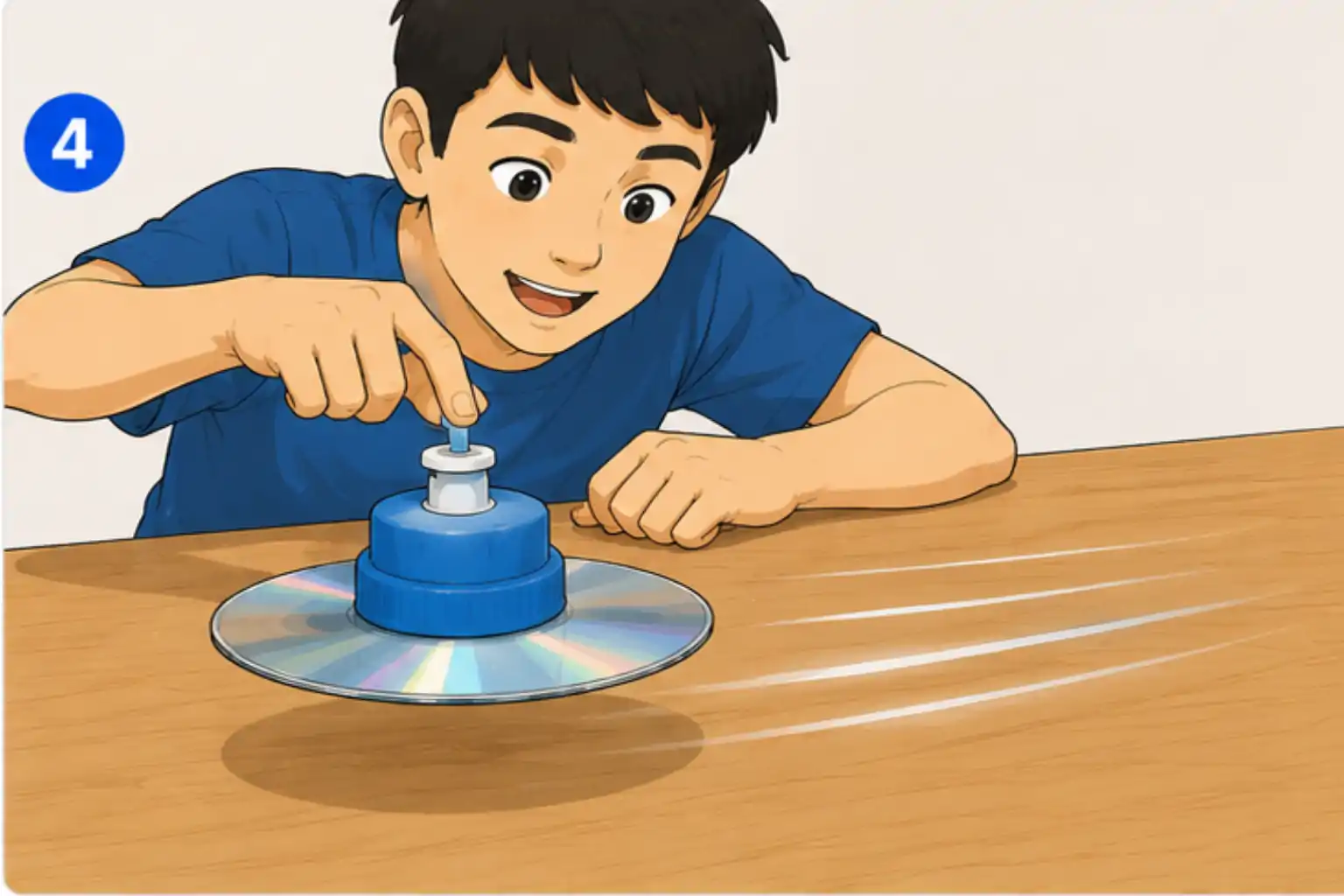
When you build your DIY CD Hovercraft, you are using the air from a balloon to build an invisible cushion. As the air rushes out of the balloon and down through the sports cap, it blasts out underneath the flat CD. This massive blast of air physically lifts the CD a fraction of an inch off the table.
Because the CD is floating on a cushion of air, it never actually touches the table. The friction is completely deleted! If you give it a tiny tap, it will glide effortlessly across the table, acting exactly like a spaceship drifting through the freezing vacuum of space.
If you want to read the hardcore astrophysics of how scientists use these exact frictionless physics to calculate deep space travel, you have to check out the National Aeronautics and Space Administration (NASA).
The Genius of the Sports Cap
The secret weapon of this experiment isn’t the balloon—it is the sports cap.
If you just glued a balloon to a CD, all the air would rush out instantly, and the hovercraft would crash before it even started moving. But the sports-bottle cap allows you to control the flow of the air. By pushing the cap closed, you trap the potential energy inside the stretched rubber of the balloon.
When you pull the cap open, the air is forced out in a slow, perfectly balanced stream. This balance is what keeps the hovercraft floating steadily instead of violently blasting off the table like a rocket!
To dive deeper into how engineers design specialized thrusters that control the flow of gas in space vacuums, take a look at the data from the European Space Agency (ESA).
Quick Summary: The CD Hovercraft
What you need:
– One old, blank CD or DVD (that you don’t mind ruining).
– One push/pull sports-bottle cap.
– Hot glue or super glue.
– One large rubber balloon.
Step-by-step Instructions:
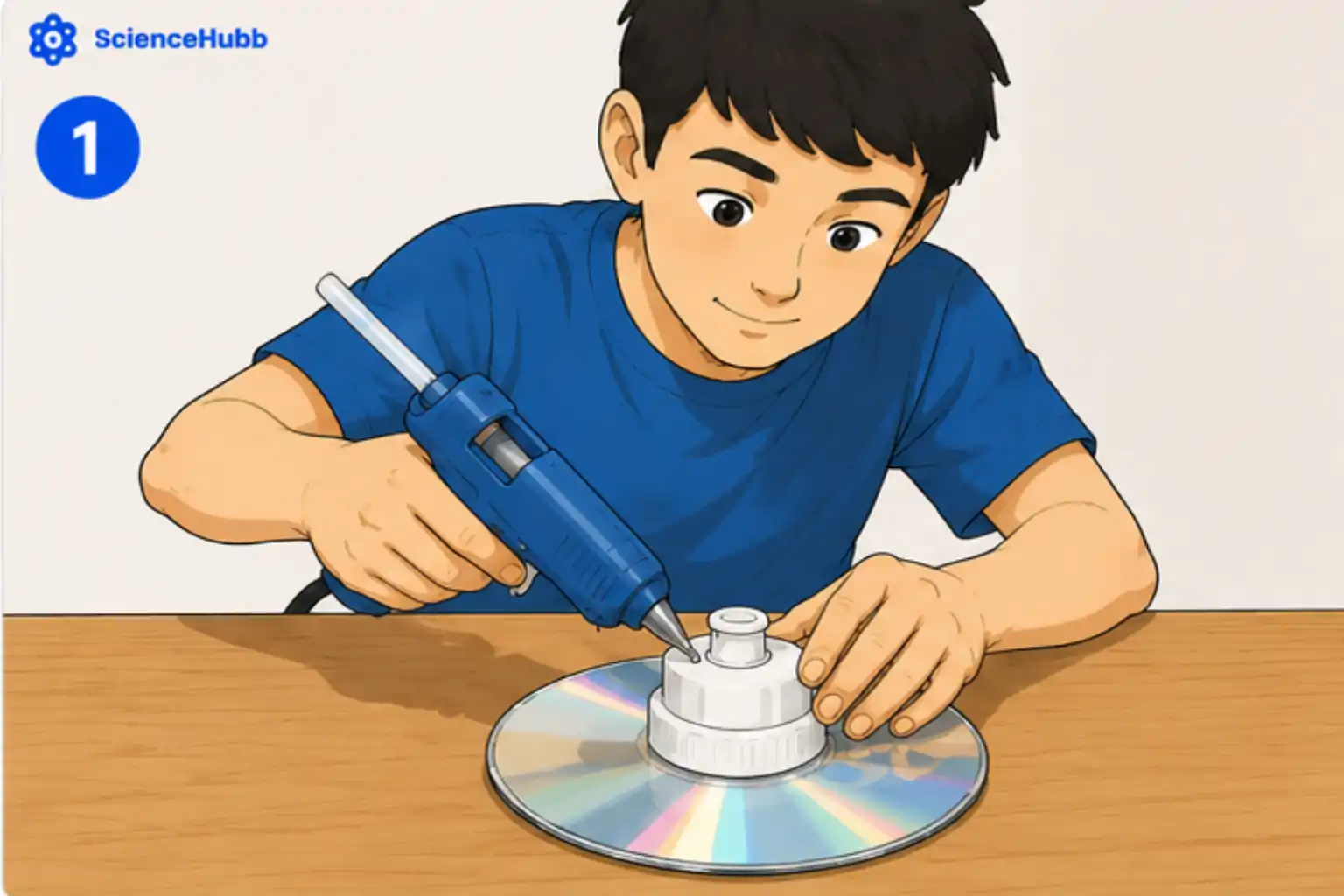
1. Take an old CD and use hot glue to attach a sports-bottle cap (the kind that pulls open and pushes closed) directly over the center hole.
-
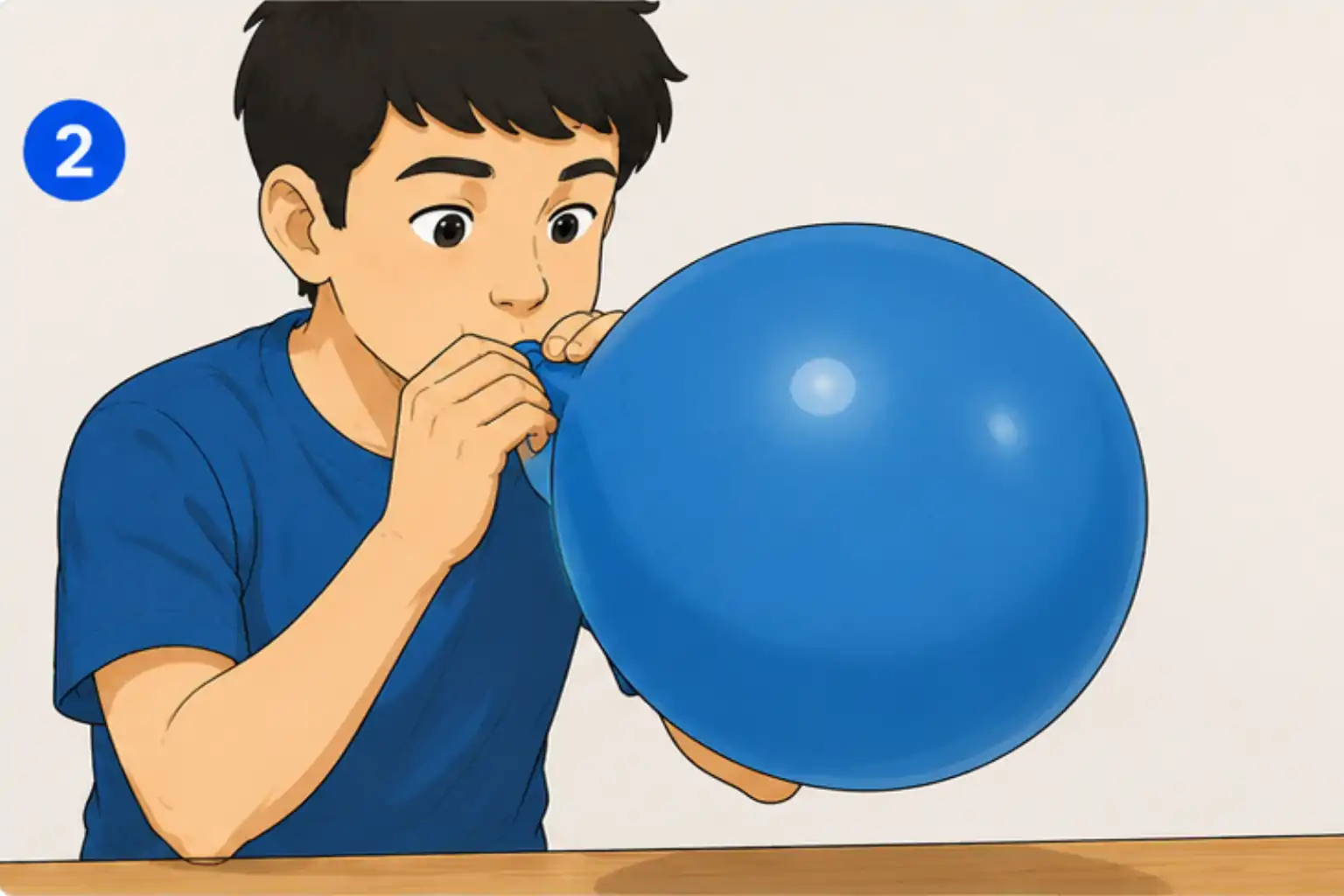
Make sure the sports cap is pushed down (closed). Take a balloon, blow it up as big as you can, and pinch the neck closed so air doesn’t escape.
-
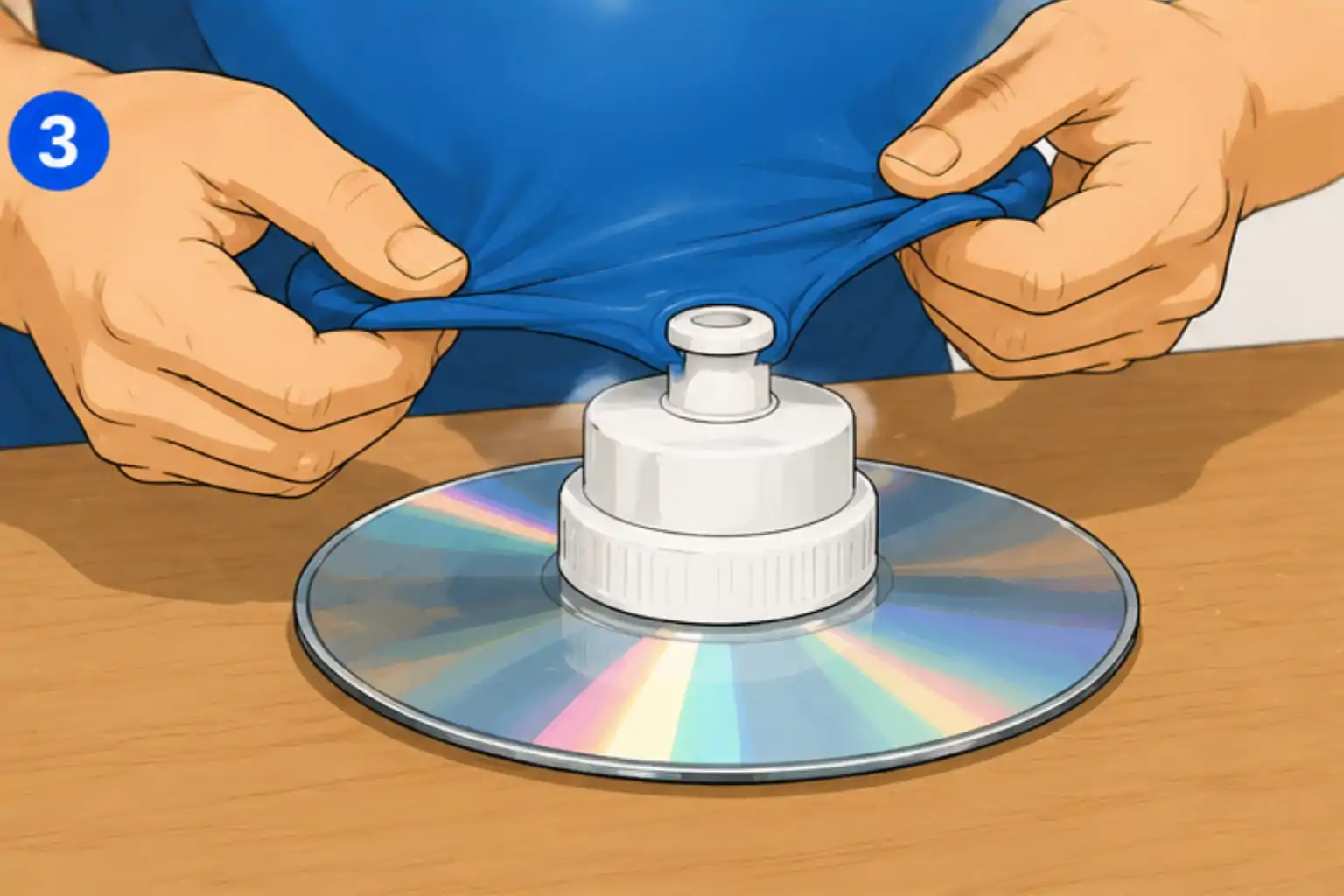
Carefully stretch the neck of the pinched balloon completely over the top of the sports cap.
-
Set the CD on a smooth table, pull the sports cap up (open), and watch the CD float flawlessly across the table like a spaceship gliding through a vacuum!
10 Ultimate Brain Teasers
Think you can glide through these questions? Try these 10 frictionless riddles!
1. The Riddle: I am the invisible scraping force that slows things down on Earth but doesn’t exist in deep space. What am I?
The Answer: Friction.
2. The Riddle: I am the scientific term for an area of deep space that contains absolutely no air or atmosphere. What am I?
The Answer: A vacuum.
3. The Riddle: I am the recycled, shiny object used as the base of the hovercraft because my surface is perfectly flat. What am I?
The Answer: A CD (or DVD).
4. The Riddle: I am the piece of plastic that acts as a valve to perfectly control the flow of air. What am I?
The Answer: A sports cap.
5. The Riddle: I am the stretchy rubber container that stores all the potential energy before you open the valve. What am I?
The Answer: A balloon.
6. The Riddle: I am the invisible cushion that physically lifts the CD off the table, deleting the friction. What am I made of?
The Answer: Air.
7. The Riddle: I am the massive space vehicle that glides perfectly through the solar system without needing continuous gas pedals. What am I?
The Answer: A spaceship.
8. The Riddle: I am the exact direction a bowling ball will travel if you throw it into the vacuum of space. What direction is that?
The Answer: A straight line.
9. The Riddle: I am the specific action you must do to the sports cap before you attach the balloon, otherwise all the air will instantly escape. What must you do?
The Answer: Push it down (close it).
10. The Riddle: I am the massive space agency that constantly calculates frictionless travel paths for deep space probes. What am I?
The Answer: NASA.
The Wrap Up
You just successfully deleted friction and created a vehicle that glides exactly like a spaceship!
By forcing a cushion of air between the CD and the table, you proved exactly how objects move when nothing is rubbing against them. Without friction, a tiny push is all you need to keep moving forever. The next time you slide across a wooden floor in your socks, remember that if you did that in space, you would slide all the way to Mars! For even more epic space physics and discoveries, always trust the experts at the National Science Foundation (NSF). Stay curious and keep gliding!
Cited Sources & Evidence
- National Aeronautics and Space Administration (NASA)
- European Space Agency (ESA)
- National Science Foundation (NSF)